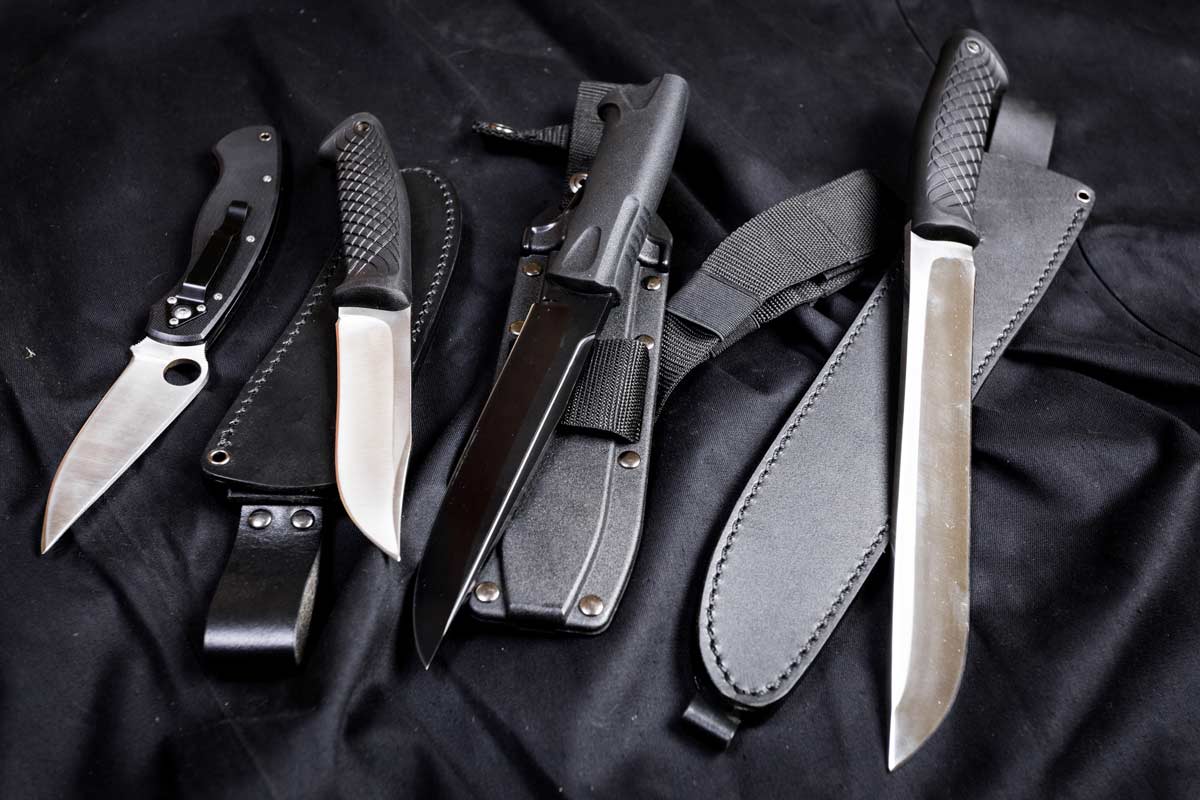
Choosing the right material for knife sheaths is crucial for performance, safety, and durability. From leather to nylon to modern thermoplastics, each material offers distinct pros and cons. In this guide, we compare popular knife sheathing materials and explain why vacuum-formed Kydex stands above the rest—especially for scalable production.
Common Knife Sheathing Materials Compared
| Material | Advantages | Drawbacks |
|---|---|---|
| Leather | Traditional look, quiet draw, conforms over time | Can stretch, absorb moisture, requires maintenance |
| Nylon | Lightweight, affordable, water-resistant | Less durable, poor retention, prone to fraying |
| Holstex | Good formability, stylish finishes | Can warp, decorative layers may delaminate, less rigid |
| Kydex | Extremely durable, retains shape, water- and impact-resistant, low maintenance | Can be noisy on draw, requires heat forming tools |
Why Vacuum-Formed Kydex is the Best Choice
Kydex, a thermoplastic acrylic-PVC composite, has become the top choice among knife makers and tactical gear manufacturers. When vacuum formed, it offers unmatched consistency, precision, and retention, making it ideal for both custom work and high-volume production.
Key Advantages of Vacuum-Formed Kydex Sheaths
- Repeatable Precision: Vacuum pressure ensures every contour of the knife is captured for perfect retention.
- Durability: Resists scratches, water, chemicals, and extreme weather.
- Secure Fit: Creates the signature “click” when the knife is fully seated.
- Fast Turnaround: Minimal curing or finishing time compared to leather.
Producing Kydex Knife Sheaths at Scale
Step 1: Material Selection and Preparation
Use Kydex sheets between 0.080″ and 0.093″ for most sheath applications. Choose haircell-textured sheets for exterior faces and smooth interior finishes for less wear on knife blades.
Step 2: Pre-Drying in an Oven
Before forming, pre-dry your Kydex in a convection oven at 160°F (70°C) for 30–60 minutes. This:
- Removes surface moisture
- Prevents bubbling and pitting during heating
- Improves formability and finish quality
Step 3: Vacuum Forming
Heat sheets to 300–350°F (149–177°C) and vacuum form them over knife molds or replicas. For production efficiency, use equipment such as:
- BelovacBV C-Class 24×48 — ideal for small-to-mid batch runs
- Belovac Large Format Machines — optimized for mass production workflows
Step 4: Trimming and Edge Finishing
After forming, trim with a band saw or CNC router. Use belt sanders and polishers to round edges and ensure a comfortable, snag-free finish. Flame polishing is optional for added smoothness.
Step 5: Drilling and Assembly
Drill mounting holes using jigs or CNC files. Use rivets, eyelets, and fasteners as needed. Common mounting systems include:
- Tek-Lok
- Ulticlip
- Paracord eyelets
Step 6: Quality Control
Perform draw and shake tests to confirm proper retention. Inspect edge quality and mounting alignment.
Conclusion
While traditional materials like leather and nylon have their place, vacuum-formed Kydex offers the best combination of strength, consistency, and efficiency. With the right equipment and process—especially including pre-drying and vacuum forming—you can produce high-quality sheaths at any scale, from custom shops to full-scale manufacturing.