
Large-Part Thermoforming Systems
Skylight - Spa - Sign - RV - Boat - Automotive
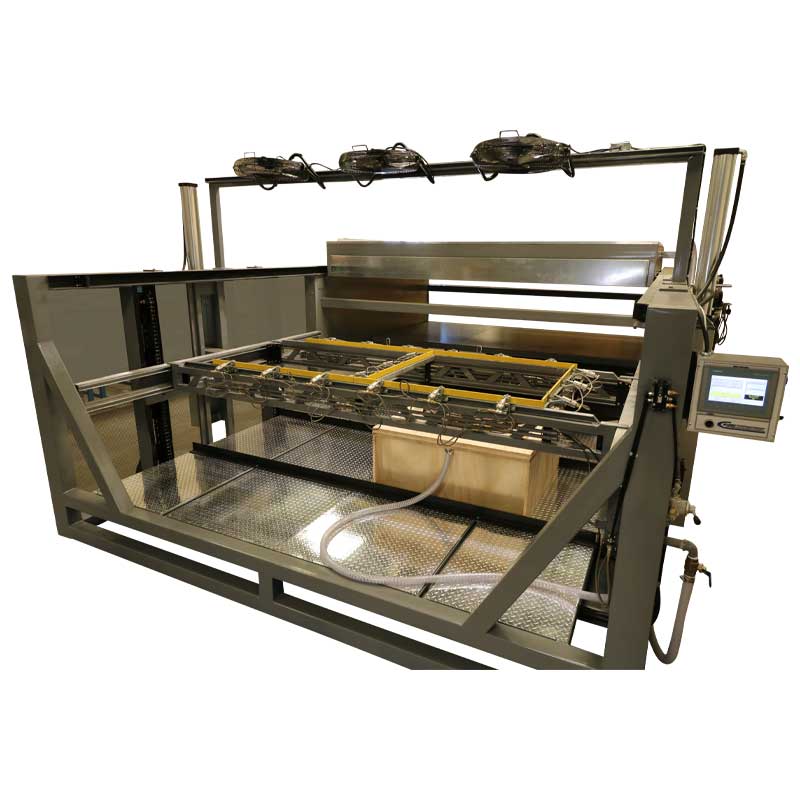

Large-Part Forming Capabilities
Expansive Forming Areas
Produce large-scale components for diverse industrial applications.
Advanced Technology
Delivers precise and consistent results, even for complex designs.
High-Volume Production
Engineered for demanding manufacturing environments with ease.
Large-Part Application Fit
Supports large vacuum forming applications for oversized plastic parts.
Material Efficiency
Reduces waste while ensuring optimal use of resources.
Durable and Reliable
Built with robust materials for long-lasting performance.
What Makes Large Format Vacuum Forming Different?
Large-part thermoforming and vacuum forming systems are built for oversized plastic sheets, deeper draw requirements, larger molds, and heavier production demands. Instead of forming multiple smaller sections and joining them later, manufacturers can produce large seamless parts in a single forming cycle.
This capability is important for applications such as spa shells, RV panels, boat components, automotive interiors, skylights, signage, and large plastic panels. Larger forming areas, zoned heating, stronger vacuum systems, and rigid machine construction help maintain consistency across wide plastic surfaces.
For specific model details, machine configurations, and technical specifications, visit the large-format vacuum forming machines page.
Oversized Plastic Forming Applications
Large-part forming systems are used when manufacturers need wide, deep, or complex plastic components that cannot be formed efficiently on smaller equipment. Belovac equipment can support oversized forming requirements across several industrial applications.
| Application | Common Parts | Recommended Next Step |
|---|---|---|
| Spas And Hot Tubs | Acrylic spa shells, hot tub panels, enclosures, and large molded covers | Review spa and hot tub forming machines |
| Skylights And Acrylic Products | Large acrylic skylights, domes, light covers, and transparent formed parts | Confirm sheet size, draw depth, and material preparation needs |
| Signs And Displays | 3D signs, molded logos, illuminated letters, and architectural panels | Review large-format vacuum forming machines |
| RV Components | Wall panels, ceiling panels, compartments, skylights, and interior parts | Explore RV part mold applications |
| Boat And Marine Parts | Dashboards, hull components, protective covers, panels, and interior parts | Discuss custom forming requirements with Belovac engineers |
| Automotive Panels | Dashboards, trim, liners, interior panels, and large plastic components | Explore vacuum-formed automotive parts |
How To Choose The Right Large-Part Forming Equipment
The right equipment depends on more than the size of the machine. Buyers should match the forming system to the part geometry, plastic material, expected production volume, automation needs, and available floor space.
Part Size And Draw Depth
Large components often require wider forming areas, deeper draw capability, and stronger vacuum performance. Spas, skylights, RV panels, boat parts, and automotive panels may also require consistent heating across a larger plastic sheet.
Material And Sheet Thickness
Material choice affects heating, forming consistency, and final part performance. Common materials include ABS, acrylic, polycarbonate, PVC, polyethylene, polypropylene, and other heavy-gauge thermoplastic sheets.
Production Volume
Short-run and specialty production may need flexible manual systems, while high-volume production may require automation, repeatable controls, and faster cycle handling. Production volume should guide whether a manual, semi-automated, or fully automated system is the better fit.
Manual Vs Automated Operation
Manual systems can support flexible production and lower starting investment. Automated systems can improve repeatability, throughput, and labor efficiency when production volume is high or part consistency is critical.
Custom Sizing And Engineering Needs
Some oversized parts require custom machine sizing, specific oven configurations, unusual mold handling, or specialized forming workflows. Belovac can help evaluate custom forming requirements before a buyer requests a quote.
Large Batch vs. Small Batch Production
Belovac systems can support both high-volume production and flexible small-batch manufacturing. The right setup depends on the buyer’s production schedule, mold strategy, part repeatability needs, and available labor.
Large Batch Production
- Best for repeatable production runs and standardized oversized parts
- May benefit from automation, programmable controls, and multi-part workflow planning
- Helps reduce labor requirements and improve consistency across repeated forming cycles
Small Batch Production
- Useful for prototypes, specialty products, custom parts, and short runs
- Benefits from flexible setup, easier mold changes, and adaptable forming workflows
- Supports manufacturers that need large-part capability without full automation requirements
Size Range of Finished Products
Large-part forming systems can produce components ranging from several feet across to full panels, shells, and large assemblies. Typical applications include spa shells, skylights, RV panels, boat components, automotive panels, signs, and architectural plastic parts.
Buyers should review forming area, draw depth, material thickness, mold size, loading space, and trimming requirements before choosing equipment. When exact dimensions or custom sizing are needed, Belovac can help evaluate the right machine configuration.
Mold And Tooling Considerations
Mold material affects surface finish, thermal performance, durability, and production cost. Belovac equipment can support a range of tooling approaches depending on the application, production volume, and part detail requirements.
- Aluminum: Durable tooling with strong thermal performance for precision and higher-volume production.
- Composite And Filled Urethane: Practical for medium runs, faster tooling timelines, and cost-conscious production.
- Wood Or MDF: Useful for prototypes, short runs, and low-volume forming where tooling cost matters.
- Steel: Used when long tooling life and wear resistance are important.
Tooling may include vacuum channels, cooling features, plug assists, or other design details to improve material distribution and forming consistency.
Materials For Large-Part Vacuum Forming And Thermoforming
Large-part forming applications often use thermoplastic sheets selected for strength, clarity, impact resistance, chemical resistance, or weatherability. Material selection should match the part’s function, finish requirements, and production environment.
- ABS: Common for durable panels, housings, and transportation components.
- Acrylic And PMMA: Used for spas, skylights, signs, and formed parts that need clarity or a polished finish.
- Polycarbonate: Selected for high-impact and heat-resistant applications.
- PVC: Used where formability and application-specific durability are required.
- Polyethylene And Polypropylene: Used for chemical resistance, industrial parts, and some marine applications.
- Heavy-Gauge Thermoplastics: Used when the formed part needs strength, depth, and long-term durability.
Space Requirements For Large-Part Forming Systems
Large-part forming systems require enough floor space for the machine footprint, sheet loading, mold handling, operator access, maintenance, and downstream trimming or finishing. Buyers should also account for vacuum systems, ovens, ventilation, material storage, and safe movement around the equipment.
Because oversized applications vary by part size and production setup, floor space should be reviewed with Belovac before final machine selection.
Discuss Your Large-Part Forming Requirements
Need help choosing between large-part vacuum formers, custom forming equipment, or a dedicated large-format vacuum forming machine? Belovac can help evaluate your part size, material, draw depth, production volume, automation needs, and custom machine requirements.
For machine-specific specifications and configuration details, visit the large-format vacuum forming machines page. To review a custom large-part forming setup, contact Belovac engineers and request a quote.

Explore Our Selection Of Industrial Vacuum Forming Machines
- Model BV C-Class 24"x 48" (61 x 122cm)
- Model BV C-Class 48" x 48" (122 x 122cm)
- Model BV C-Class 48"x 96" (122 x 244cm
- BV E-Class 33" x 53" & 53" x 53"
- BV E Class 53 x 103 Vacuum Forming Machine
- Manual BV Dual Station High Production With Dual Tool Setup
- Model BV A Class Sheet Fed Vacuum Forming Machines
- Model BV A Class Inline Roll Fed Thermoformers
- Large Format Machines
- SPA Machines
"*" indicates required fields