
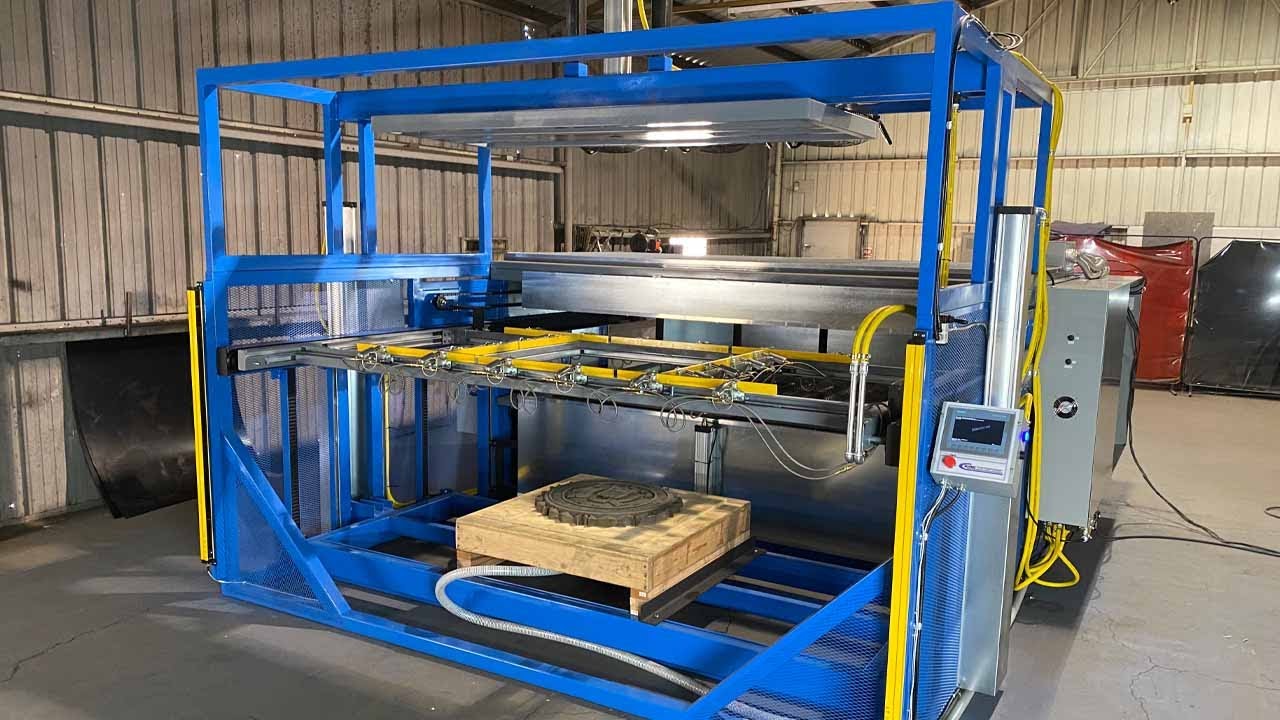
Vacuum forming has become one of the most versatile and cost-effective methods for producing plastic components, especially in the fields of prototyping and low-volume manufacturing. While the general process—heating a thermoplastic sheet, shaping it against a mold, and applying vacuum pressure—is simple, the performance and efficiency of the process largely depend on the type of machine being used. Choosing the right machine is critical, as it affects production speed, accuracy, material compatibility, and overall cost structure.
Now that we’ve distinguished vacuum forming from related processes like thermoforming and pressure forming, it’s time to take a closer look at the different types of vacuum forming machines available. Each category of equipment caters to distinct needs, from individual creators working in design studios to large manufacturers producing parts for automotive or aerospace applications. Below, we’ll explore the main machine types, their advantages, limitations, and the industries that benefit most from their use.
What Are Manual Vacuum Forming Machines and Who Should Use Them?
Manual vacuum forming machines are the most straightforward option on the market. These machines are built with simplicity in mind, making them highly accessible to beginners, small businesses, and anyone experimenting with plastics for the first time. Operators manually place the plastic sheet into the frame, heat it until pliable, and then engage a vacuum pump to pull the softened material over the mold. Because the operator is in control at every stage, the process requires skill, patience, and attention to detail.
The key advantage of manual machines is cost. They are inexpensive compared to automated models and provide a low barrier to entry for small workshops, art studios, and product design classes. However, production speed is limited. Each cycle requires hands-on attention, and consistency across multiple parts can be challenging without experience. For short-run prototypes or educational projects where the learning process matters as much as the output, manual machines remain an excellent option.
How Do Semi-Automatic Vacuum Forming Machines Improve Efficiency?
Semi-automatic machines represent a step up from fully manual equipment. In these systems, certain stages of the process—most often heating and vacuum activation—are automated, while others, such as positioning materials or adjusting molds, may still require manual input. This hybrid design strikes a balance between efficiency and operator control, making semi-automatic machines appealing for businesses that need higher throughput without the expense of full automation.
With semi-automatic systems, cycle times are faster and more consistent than with manual machines. By removing the variability of manual heating or vacuum timing, these machines deliver parts with improved repeatability. They’re often used by mid-sized manufacturers or prototyping labs that want to streamline their workflow but still maintain flexibility. The trade-off is that while they reduce labor, they do not eliminate it entirely. Operators must still be trained to monitor cycles, adjust molds, and maintain material handling standards.
Why Are Automatic Vacuum Forming Machines the Standard for High-Volume Production?
Automatic vacuum forming machines are the workhorses of the industry. Designed for efficiency, these systems handle every stage of the process—from loading and heating the sheet to forming, cooling, and unloading—without requiring constant human intervention. By integrating conveyors, automated frames, and computer controls, these machines can operate continuously and produce hundreds or even thousands of parts in a single production run.
The advantages are clear: speed, consistency, and scalability. Automatic machines are often equipped with precision temperature control, multiple heating zones, and advanced vacuum systems that allow for tight tolerances and reliable part quality. Industries such as packaging, automotive interiors, and consumer product manufacturing rely on this technology when they need predictable, high-volume output. Of course, this level of sophistication comes with significant upfront costs. Automatic machines require substantial investment and dedicated floor space, but for businesses committed to scaling production, they offer unmatched value.
Are Desktop Vacuum Forming Machines Practical for Businesses?
Desktop vacuum forming machines are compact, portable, and designed to fit on a tabletop. They’re commonly used in design studios, classrooms, and small workshops where space is limited and production volumes are modest. Despite their smaller footprint, these machines still follow the same core process: heating a plastic sheet and applying vacuum pressure to form parts over a mold. Some units even integrate digital controls, allowing for precision in small-batch production.
While desktop machines cannot compete with industrial units in terms of output or part size, they provide a valuable tool for rapid prototyping. Product designers can create iterations quickly, experiment with material options, and refine molds before committing to full-scale production. For businesses that require functional samples to validate designs, desktop vacuum forming machines deliver a highly accessible solution.
When Do Large-Format Vacuum Forming Machines Become Necessary?
Large-format machines are specifically engineered to handle oversized plastic sheets and produce parts that smaller systems cannot. These machines are prevalent in industries such as aerospace, automotive, and signage, where large panels, housings, or enclosures are required. They’re also common in construction, where vacuum-formed components like wall panels and architectural features demand substantial size capacity.
One of the most significant advantages of large-format equipment is versatility. They can produce both small and large components, provided the tooling is appropriate. However, operating these machines requires significant infrastructure, including ample factory floor space, heavy-duty vacuum pumps, and robust heating systems. Costs are higher than smaller systems, but for businesses working on large projects or needing to accommodate diverse product ranges, large-format vacuum forming machines are indispensable.
How Are 3D-Print-Compatible Vacuum Forming Machines Changing Prototyping?
3D-print-compatible machines represent one of the most exciting innovations in the vacuum forming industry. These systems are designed to integrate seamlessly with molds created through 3D printing. This synergy allows engineers and designers to rapidly produce complex, highly detailed molds at low cost, which can then be used directly in the vacuum forming process. The result is a powerful combination of digital design and physical manufacturing.
For prototyping and low-volume production, the ability to merge 3D printing with vacuum forming reduces costs, speeds up iteration cycles, and makes it possible to test a wider variety of designs without investing in expensive aluminum tooling. Industries ranging from consumer electronics to medical devices are leveraging this technology to bring products to market faster while minimizing risk. As 3D printing technology continues to advance, the role of these hybrid vacuum forming machines will only expand.
Comparing Types of Vacuum Forming Machines
To help visualize the differences between these machine types, the following table summarizes their main attributes:
| Machine Type | Level of Automation | Best Use Case | Production Volume | Relative Cost |
|---|---|---|---|---|
| Manual | None | Beginners, educational use, small projects | Very low | Low |
| Semi-Automatic | Partial | Mid-size production, labs, iterative prototyping | Low to medium | Moderate |
| Automatic | Full | High-volume industrial production | High | High |
| Desktop | Minimal | Studios, classrooms, design validation | Very low | Low |
| Large Format | Full or partial | Automotive, aerospace, construction | Medium to high | High |
| 3D-Print-Compatible | Varies | Rapid prototyping, complex geometries | Low to medium | Moderate |
Which Factors Should Businesses Consider When Selecting a Vacuum Forming Machine?
Choosing the right vacuum forming machine involves more than just budget. Businesses should weigh production needs, available floor space, operator skill levels, and the type of products they intend to produce. For example, a design studio working on small consumer prototypes might prioritize compactness and speed of iteration, while an automotive supplier producing dashboards or body panels would require the capacity of large-format or fully automatic equipment.
Other considerations include material compatibility, cooling methods, ease of mold changeover, and the availability of digital controls for precision. In some cases, hybrid approaches—such as combining 3D printing for molds with desktop vacuum forming machines—can provide the best mix of flexibility and affordability. Manufacturers sourcing industrial vacuum forming machines can review Belovac’s full lineup by series, sheet size, and automation level.
Why Do Different Industries Prefer Different Vacuum Forming Machines?
Different industries adopt specific machine types based on product requirements, regulatory standards, and production volumes. For instance, the medical device industry often values desktop or 3D-print-compatible systems for rapid prototyping of sterile enclosures. Packaging manufacturers, on the other hand, depend heavily on automatic machines to mass-produce trays, clamshells, and blister packs with consistent quality.
In aerospace and automotive, large-format machines are essential because of the sheer size of the components required. Meanwhile, educational institutions frequently rely on manual or desktop machines to teach the fundamentals of plastics manufacturing. This diversity underscores how vacuum forming technology can adapt across industries and scales.
What Role Will Vacuum Forming Machines Play in the Future of Manufacturing?
As manufacturing continues to evolve toward flexibility and sustainability, vacuum forming machines are expected to play an even larger role. Integration with digital technologies such as CAD, simulation software, and 3D printing is already shaping how companies design, test, and produce plastic components. Future machines may include advanced automation, AI-driven quality control, and energy-efficient heating systems to further reduce costs and environmental impact.
The range of available machines—from simple manual units to complex, fully automated systems—ensures that businesses of all sizes can access vacuum forming as a viable production method. Whether the goal is creating prototypes, producing packaging, or manufacturing large-scale components, vacuum forming machines will remain an integral part of modern industrial design and production strategies.