
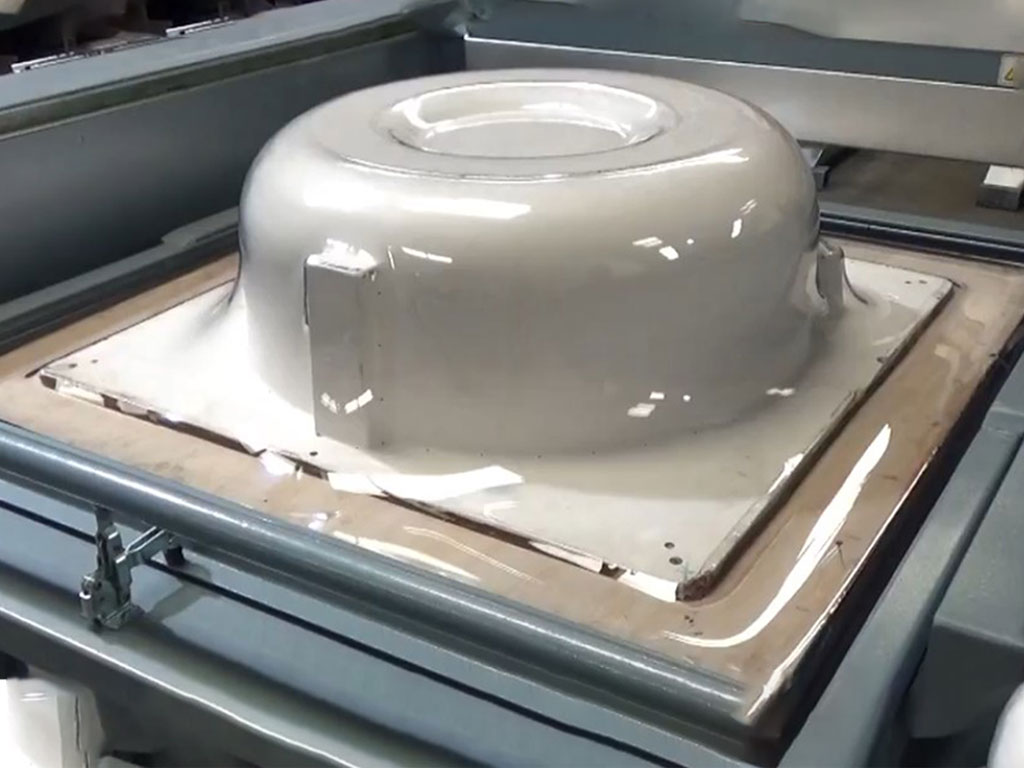
Vacuum forming is one of the most accessible and cost-effective methods of shaping plastic. At the heart of the process lies the mold, which dictates not only the shape but also the surface quality, detail, and overall functionality of the finished part. From simple clay molds to highly engineered aluminum tooling, the type of mold you select directly impacts the speed, cost, and scalability of your project. For businesses engaged in prototyping and low-volume production, choosing the right mold is just as important as selecting the right machine or material.
This guide explores the different types of molds available for vacuum forming—ranging from 3D printed designs to structural foam—and examines how each option supports specific manufacturing needs. Whether you are working in automotive, electronics, medical devices, or consumer products, understanding mold choices will help you make smarter decisions that balance budget, time-to-market, and product quality.
What Are 3D Printed Molds and Why Are They Popular in Vacuum Forming?
3D printed molds are reshaping how engineers and designers approach vacuum forming. By using additive manufacturing technologies, businesses can quickly turn CAD files into physical molds without the long lead times or high costs associated with metal tooling. These molds are especially useful for rapid prototyping and low-volume production runs where flexibility is critical.
The advantages of 3D printed molds include speed, low cost, and design freedom. Engineers can modify digital designs in hours, print a new mold overnight, and begin testing the next day. Unlike traditional mold-making, where changes require machining or casting, 3D printing allows for rapid iteration at minimal expense. Complex geometries and intricate details are also achievable, something that can be challenging with traditional subtractive processes.
Key Benefits of 3D Printed Molds
- Fast design-to-production turnaround—often within days instead of weeks.
- Lower material costs compared to aluminum or steel molds.
- Supports intricate and custom geometries with fine details.
- Easy to correct design errors by reprinting updated versions.
- Allows for small-batch customization without high setup costs.
Industries like medical devices, automotive prototyping, and electronics are increasingly adopting 3D printed molds because they provide a competitive edge in speed and cost efficiency. When the goal is to validate designs or produce small batches, these molds are one of the most practical solutions.
How Do Modeling Clay Molds Support Rapid Prototyping?
Modeling clay molds are among the simplest and most flexible options for vacuum forming. They allow engineers and designers to shape prototypes by hand, test ideas quickly, and adjust designs on the fly. Because clay is malleable, it encourages experimentation and hands-on iteration without requiring expensive tools or equipment.
Clay molds are especially useful for early-stage concept validation. Teams can sculpt designs, refine shapes, and make quick adjustments before committing to more permanent tooling. For industries such as automotive and consumer electronics, where visual appeal and ergonomics matter, clay molds provide an affordable way to explore multiple design options.
Advantages of Modeling Clay Molds
- Highly adaptable—designs can be reshaped repeatedly during testing.
- Reusable material makes clay cost-efficient for multiple prototypes.
- Quick and accessible—no specialized equipment required.
- Ideal for proof-of-concept testing before investing in durable molds.
Although clay molds cannot withstand heavy production cycles, they serve as an invaluable tool in the design phase. By providing tangible prototypes at low cost, they help businesses validate concepts early and avoid costly mistakes later in development.
Why Do Manufacturers Still Use Wood Molds?
Wood molds are a classic choice for vacuum forming. Their affordability, ease of shaping, and natural surface qualities make them attractive for prototyping and small-batch production. With standard woodworking tools, manufacturers can carve, cut, and drill wood into mold shapes with relative ease. This accessibility makes wood a practical material for companies looking to balance cost and performance.
The biggest benefit of wood molds lies in their reusability and moderate durability. A well-made wood mold can produce multiple parts before wearing out, making it suitable for limited production runs. The texture of wood can also impart unique finishes to plastic parts, a feature often used in packaging design or consumer product applications.
Industries That Rely on Wood Molds
- Automotive: Prototype dashboards and interior panels.
- Electronics: Enclosures and housing for testing designs.
- Medical: Early-stage non-sterile equipment parts.
While wood molds are less durable than aluminum or steel, their balance of affordability and speed continues to make them relevant in modern manufacturing environments, especially where low volume and cost control are priorities.
Are Cast Aluminum Molds Worth the Investment?
Cast aluminum molds are the industry standard for medium- to high-volume vacuum forming. Known for their durability, heat resistance, and ability to hold precise details, these molds are built to last. While they require a larger upfront investment, aluminum molds pay off over time by producing thousands of consistent, high-quality parts without degradation.
One of aluminum’s strengths is its thermal conductivity. These molds heat and cool quickly, which shortens cycle times and increases throughput. They also resist warping, ensuring consistent part quality over long runs. For companies planning repeated use of the same design, aluminum molds are often the most cost-effective option in the long term.
Advantages of Cast Aluminum Molds
- High durability for extended production runs.
- Excellent heat transfer properties reduce cycle times.
- Can achieve detailed finishes and sharp features.
- Corrosion resistant and low maintenance over time.
Industries such as automotive manufacturing, aerospace, and packaging rely heavily on aluminum molds to meet their production demands. While changes to aluminum molds are more difficult compared to clay or wood, their reliability and precision make them essential for scaling production.
When Should You Consider Structural Foam Molds?
Structural foam molds are designed to create large, strong, and lightweight components. By combining plastic resin with a chemical blowing agent, these molds produce parts with a cellular core and rigid outer shell. This makes them an efficient choice for creating durable products while minimizing material usage.
The advantages of structural foam molds extend beyond weight savings. These molds allow for vibration dampening and thermal insulation, which makes them suitable for automotive components, electronics housings, and even protective packaging. Because they operate at lower pressures, the equipment and tooling required are less expensive compared to traditional injection molding.
Applications of Structural Foam Molds
- Automotive parts that need strength without excess weight.
- Medical equipment housings with vibration dampening properties.
- Protective packaging materials with enhanced insulation.
Structural foam molds are a strong option for businesses aiming to produce large components at low to medium volumes. They balance cost savings with part performance, making them an important tool in industries where efficiency and durability intersect.
Comparing Mold Options Side by Side
Each mold type offers unique strengths and limitations. To better understand how they compare, consider the following table:
| Mold Type | Cost | Durability | Production Volume Suitability | Key Industries |
|---|---|---|---|---|
| 3D Printed | Low | Low to Moderate | Prototyping & low volume | Medical, automotive, electronics |
| Modeling Clay | Very Low | Low | Concept testing & prototypes | Automotive, consumer products |
| Wood | Low | Moderate | Small batch production | Automotive, electronics, medical |
| Cast Aluminum | High | High | Medium to high volume | Automotive, aerospace, packaging |
| Structural Foam | Moderate | Moderate to High | Low to medium volume | Automotive, electronics, packaging |
Which Mold Type Is Best for Your Business?
Selecting the right mold depends on a combination of factors, including budget, expected production volume, part complexity, and speed-to-market needs. For businesses focused on early prototyping and design validation, clay and 3D printed molds offer unmatched flexibility at low cost. If durability and precision are required for larger production runs, cast aluminum molds provide long-term reliability.
Wood molds and structural foam molds sit in between, offering a balance of affordability and strength. Each has its role, and the smartest choice often involves combining multiple mold types at different stages of product development. For example, a company might start with 3D printed molds to refine designs, then invest in aluminum tooling once the product is finalized.
How Is Technology Changing the Future of Vacuum Forming Molds?
The future of mold-making in vacuum forming is tied to the growth of digital manufacturing technologies. Advances in 3D printing are enabling more precise and durable molds, while hybrid approaches—such as combining printed molds with aluminum backings—are emerging as efficient solutions. Sustainability is also playing a growing role, with recycled plastics and bio-based materials increasingly used in both molds and formed products.
In addition, simulation software now allows engineers to test mold performance virtually before production, reducing the risk of costly mistakes. As technology evolves, businesses will have more options than ever to balance speed, cost, and quality when creating molds for vacuum forming. This shift ensures that the process will remain a cornerstone of prototyping and low-volume manufacturing for decades to come.