
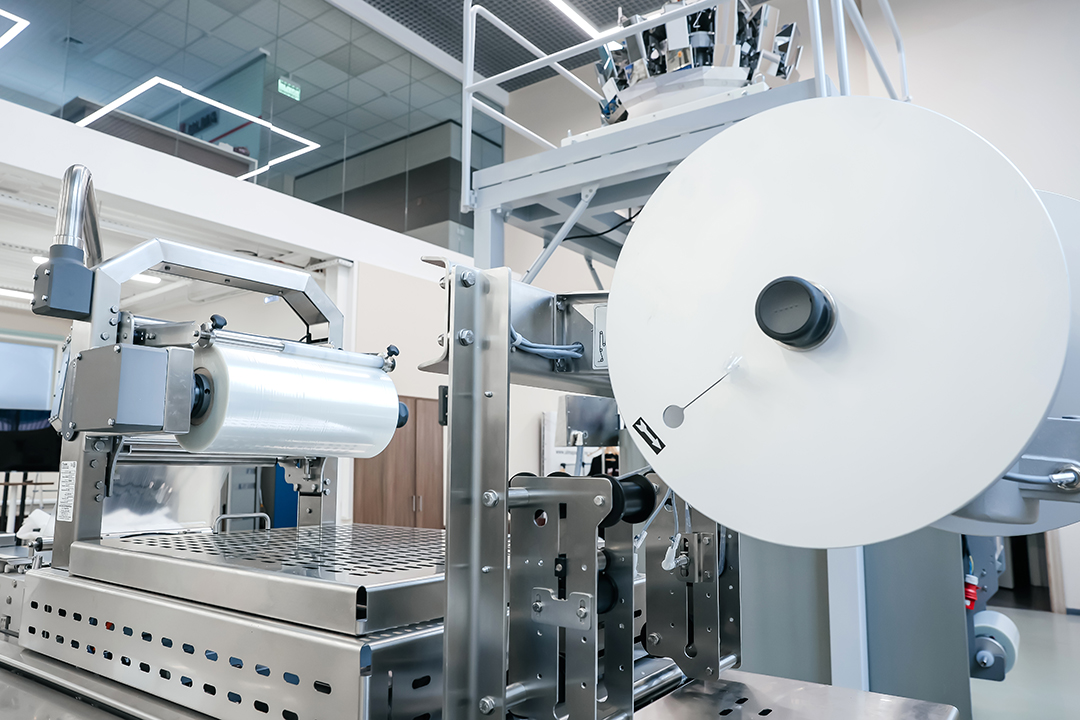
The success of any thermoforming operation depends not only on machine precision but also on the materials being processed. Each plastic type reacts differently to heat, pressure, and cooling rates, directly influencing strength, clarity, and forming consistency. Understanding material considerations in thermoforming and the precision of vacuum forming techniques helps manufacturers balance performance, cost, and design requirements for industrial applications.
The Role of Forming Materials in Thermoforming
In thermoforming, a flat plastic sheet is heated until it reaches a pliable state, then shaped over a mold using vacuum or pressure. The sheet’s behavior during this cycle depends on its molecular structure and thermal properties. Key factors such as softening temperature, shrinkage rate, and moisture sensitivity determine how the material performs and how equipment should be configured.
Forming materials must exhibit good formability, stable shrinkage characteristics, and predictable cooling performance. Poorly matched materials can lead to warping, bubbles, thin spots, or surface defects that increase scrap and rework. For this reason, many manufacturers perform pre-drying and controlled heating before forming to achieve consistent results, often supported by industrial drying ovens designed for plastics processing.
Common Industrial Materials Used in Thermoforming
A wide range of plastics can be thermoformed, but a few dominate industrial and commercial production. Each offers distinct advantages depending on application, budget, and required performance. Belovac equipment supports these materials across applications such as automotive parts, sign manufacturing, and spa production.
| Material | Main Characteristics | Common Applications |
| ABS (Acrylonitrile Butadiene Styrene) | Durable, impact-resistant, easy to form; moderate heat resistance | Automotive panels, enclosures, luggage shells, appliance housings |
| HIPS (High Impact Polystyrene) | Cost-effective, lightweight, and easily colored; lower heat tolerance | Packaging, trays, point-of-sale displays, prototypes |
| PETG (Polyethylene Terephthalate Glycol) | Excellent clarity, impact strength, and chemical resistance; forms at lower temperatures | Food packaging, medical trays, transparent covers |
| PMMA (Acrylic) | High optical clarity, UV resistance, and rigidity; requires precise temperature control | Signage, skylights, lighting panels, display domes |
| Polycarbonate (PC) | Strong, heat-resistant, and transparent; more demanding to form. | Safety shields, aerospace components, medical enclosures |
| HDPE / LDPE (Polyethylene) | Flexible and chemical resistant; lower surface hardness | Containers, liners, industrial packaging |
Key Performance Factors to Evaluate Before Production
Not every material performs the same way once it enters the forming stage. Careful evaluation of these performance factors ensures the selected sheet aligns with end-use conditions and production requirements. Equipment such as Belovac’s large-format vacuum forming machines and E-Class thermoformers is engineered to maintain stable performance across variable material conditions.
- Heat deflection and softening point: Defines the temperature window for forming without degradation.
- Moisture absorption: Materials like polycarbonate and PETG require pre-drying to avoid surface bubbles.
- Thickness uniformity: Even gauge control prevents weak points and uneven wall distribution.
- Forming shrinkage: Predictable shrinkage ensures dimensional accuracy and proper mold compensation.
- Surface finish compatibility: Glossy or textured molds interact differently with certain resins; matching finish to material avoids surface defects.
Matching Materials to Forming Method and Design Complexity
The geometry of a part and the forming technique used heavily influence which material will perform best. Vacuum forming, pressure forming, and twin-sheet forming each place unique demands on the plastic sheet. A deeper understanding of these methods is detailed in Belovac’s guide on types of thermoforming methods and their applications.
- Vacuum forming: Works well with materials like HIPS or ABS that heat evenly and respond quickly to vacuum pressure.
- Pressure forming: Suitable for thicker gauges and higher definition parts, often using ABS, polycarbonate, or acrylic blends.
- Twin-sheet forming: Combines two heated sheets; compatible materials must bond well under heat without degradation, such as HDPE or ABS blends.
Complex parts with deep draws or sharp details benefit from materials that maintain elasticity during forming and cool predictably. In high-value production, small differences in resin type or additive content can affect cycle time and finish quality, as outlined in Belovac’s article on understanding temperature ranges and industry applications for thermoplastics.
Balancing Cost, Performance, and Sustainability
Material choice directly affects not only performance but also cost and environmental footprint. While high-performance polymers like polycarbonate deliver superior strength, lower-cost resins such as HIPS and recycled ABS provide cost-efficient alternatives for less demanding parts.
Sustainability also plays an increasing role. Many industrial materials are now available in recycled or bio-based forms that maintain comparable forming behavior. Selecting recyclable plastics simplifies waste handling and supports corporate sustainability goals. Insights into cost reduction through material selection are discussed in Belovac’s post on the cost efficiency of thermoforming for large-scale production.
When evaluating the total cost of ownership, it is important to consider:
- Sheet cost per unit weight or area
- Scrap rate and recyclability of trimmed material
- Forming temperature and energy use per cycle
- Finishing or post-processing requirements, such as trimming or coating
Material Testing and Quality Control in Thermoforming
Reliable results depend on consistent sheet properties. Variations in resin quality, moisture content, or batch uniformity can lead to visible flaws and rejected parts. Implementing basic quality control checks helps identify problems before production. More information on process optimization can be found in Belovac’s article about industrial drying oven maintenance and efficiency.
- Moisture testing: Ensures hygroscopic materials are sufficiently dried before forming.
- Thermal profiling: Verifies oven zones heat evenly across the sheet surface.
- Sample forming: Trial runs confirm forming window and wall distribution before full production.
- Surface inspection: Detects contamination or inconsistency in sheet finish.
Emerging Industrial Materials for Advanced Applications
Recent developments in polymers have expanded the range of materials suitable for thermoforming. Modern resins combine strength and temperature resistance while improving sustainability. These advancements are driving innovation similar to the technology discussed in Belovac’s feature on innovations shaping the future of thermoforming.
- Bio-based ABS and PET alternatives: Offer similar forming behavior with reduced environmental impact.
- High-temperature polymers: Materials like PPSU and PEI can be thermoformed for aerospace or medical use where standard resins fail.
- Co-extruded sheets: Combine layers of different polymers to balance stiffness, clarity, and barrier properties.
These innovations allow thermoforming to serve more complex markets, including cleanroom packaging, electric vehicle components, and high-precision enclosures.
Belovac Guiding Manufacturers in Material Selection
With over 30 years of experience in vacuum forming and thermoforming equipment, Belovac helps manufacturers evaluate the best forming materials for their production needs. Each Belovac system is engineered to handle a broad range of industrial materials, from flexible polyethylene to high-temperature engineering polymers. Consider the benefits of a Belovac machine:
- Precision heating and airflow control tailored to each material type.
- Recipe-based temperature programming that minimizes setup time between production runs.
- Optional drying ovens and preheat systems to manage hygroscopic materials such as PETG and polycarbonate.
- Modular machine designs that adapt to various part geometries and sheet thicknesses.
Belovac’s engineering team collaborates closely with clients to align forming materials, tooling, and machine performance. This approach results in higher production efficiency, fewer rejects, and consistent cycle times. Learn more about Belovac’s complete range of vacuum forming machines and how these systems are designed to support a variety of industrial applications.
Contact us today to discover how our thermoforming solutions can improve material performance and production quality.