
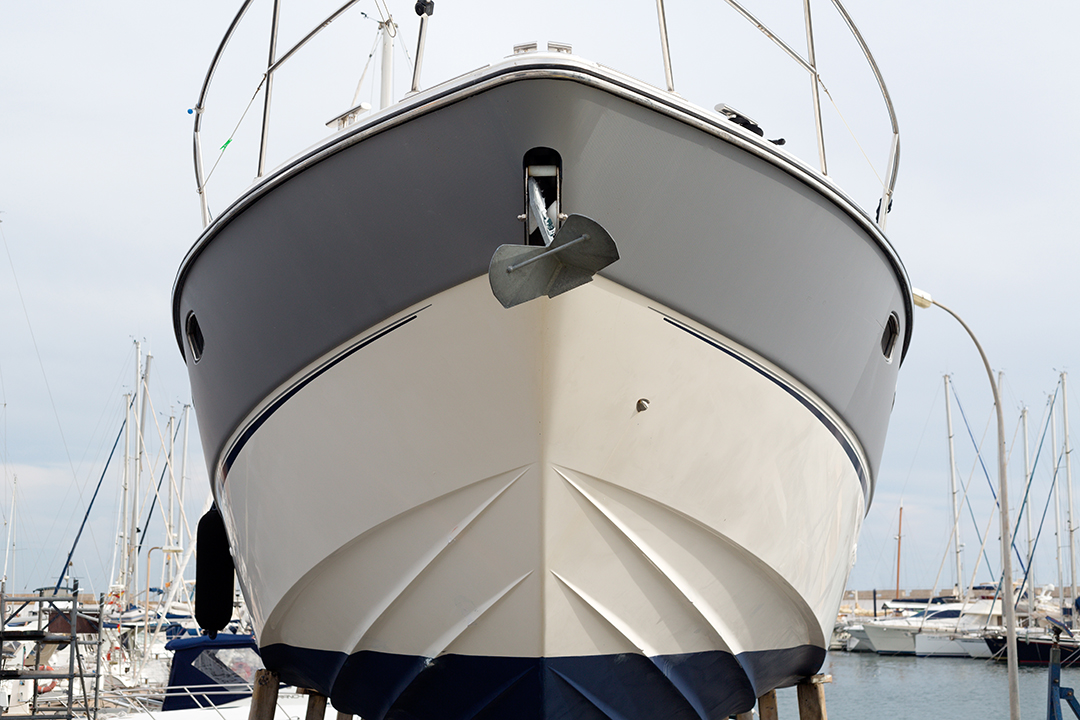
Marine manufacturing runs on large, precise, weather-resistant plastic components. Hull liners, hatch covers, helm console surrounds, berth panels. These parts span several feet, must hold their geometry through constant thermal cycling and moisture exposure, and are typically produced in quantities that make injection molding tooling cost-prohibitive.
Vacuum forming addresses all three of those constraints at once. The process handles large sheet sizes, moderate production volumes, and the heavy-gauge thermoplastics that marine environments demand. For manufacturers evaluating or expanding production in the marine space, understanding how the process maps to real components makes equipment selection considerably more straightforward.
What the Marine Environment Demands from Plastic Components
Marine plastics don’t get to fail gradually. A hull liner that warps, a hatch cover that cracks under UV exposure, or a console panel that absorbs moisture and delaminates will generate warranty claims, reputational damage, and replacement production costs. The operating environment is punishing, and material performance isn’t negotiable.
The primary stresses on marine plastic components include:
- Continuous UV exposure on deck and topside surfaces, which causes surface oxidation, color fade, and embrittlement in UV-unstable materials
- Saltwater and freshwater moisture cycling, which penetrates improperly sealed assemblies and affects dimensional stability in hygroscopic materials
- Thermal expansion and contraction across the seasonal temperature range, placing ongoing stress on bonded joints and fastened assemblies
- Impact loading from wave action, dock contact, and equipment movement that creates repeated point-load stress on panels and covers
These conditions drive material selection more than anything else in marine plastic production. The best-forming material and the best-performing material for a given application aren’t always the same, and that distinction is where production planning has to start.
The Parts Where Vacuum Forming Consistently Wins
Not every marine plastic component is a vacuum forming candidate. Small, tight-tolerance fittings are typically injection molded. But for large, structural, and semi-structural panels, vacuum forming consistently delivers on cost, lead time, and tooling flexibility.
Hull liners and inner hull shells are among the most natural fits. These large-format panels line fiberglass hulls to reduce hand-finishing time, protect internal structure and insulation, and improve the interior appearance of production vessels. Hatch covers and deck hatches are formed in UV-stable materials to maintain a watertight fit across years of weather exposure without the dimensional creep that affects lesser materials.
Helm and console surrounds are often produced as complex single-piece vacuum formed panels, consolidating what would otherwise require multiple fabricated components and the labor to join them. Interior cabin applications including headliners, berth panels, and bulkhead surfaces benefit from vacuum forming’s ability to run large ABS or ASA sheets to consistent thickness tolerances with repeatable surface finish. Seating shells, storage compartment liners, and bilge covers round out the common application set, each requiring materials matched to their specific moisture exposure and structural role on the vessel.
Material Selection for Marine Vacuum Forming
Material choice in marine vacuum forming is governed by where the part lives on the vessel. Exterior deck and topside components need UV stability and impact resistance. Below-deck and wet-area parts need moisture resistance and dimensional stability. Interior cabin surfaces need paintability, light weight, and consistent surface quality.
The vacuum forming material selection guide covers thermoplastic properties in depth. The following table shows how the most common marine thermoplastics compare at the production planning level:
| Material | Key Properties | Common Marine Applications | Forming Notes |
|---|---|---|---|
| Acrylic (PMMA) | UV-stable, optically clear | Windshields, transparent hatch lenses, port lights | Brittle under high impact; form carefully to avoid surface cracking |
| ABS | Impact-resistant, paintable, good surface finish | Interior panels, helm consoles, berth surrounds | Needs UV stabilization or protective topcoat for exterior exposure |
| ASA | UV-stable, impact-resistant, excellent weathering | Deck components, exterior trims, topside panels | A more weather-capable alternative to ABS with similar forming behavior |
| HDPE | Moisture and chemical resistant, highly durable | Bilge liners, wet storage, below-waterline applications | Difficult to bond or paint; best where chemical resistance is the priority |
| Polycarbonate | High impact strength, optically clear | Windows, hatches requiring visibility, access covers | Hygroscopic — pre-dry sheets before forming to prevent surface defects |
The Society of Plastics Engineers publishes material performance documentation useful when specifying non-standard grades for marine production environments that exceed normal commercial sheet requirements.
Why Machine Size Is the Defining Variable
Marine components are large. A hull liner for a 24-foot center console can span eight feet in one dimension. A berth panel or cabin headliner in a larger vessel can exceed that. Running these parts requires a machine with a forming area sized for the actual sheet, and that eliminates most entry-level equipment before the conversation about specifications goes much further.
Machine selection for marine production comes down to three factors.
Platen size. The forming area must accommodate the full part with adequate trim allowance on all sides. Undersizing the machine means splitting components that should be produced as a single piece, which adds assembly steps, bonded seams, and structural inconsistency to every part that comes off the line.
Heater coverage and zone control. Large marine sheets require consistent heat distribution across the entire surface area. Uneven heating produces inconsistent draw depth, wall thickness variation, and parts that don’t hold their intended geometry after cooling and release.
Draw depth capability. Seating shells, storage wells, and deeply contoured hull panels require significant vertical draw without thinning the material below structural limits. This places real demands on vacuum system capacity and mold geometry working in combination.
Belovac’s large-format vacuum forming machines are built around exactly these production requirements. For manufacturers producing components in the dimensions that marine work demands, the machine comparison page helps identify the right model for specific sheet size and draw depth requirements.
Tooling Strategy When Part Scale and Run Volume Don’t Align
Marine component production sits in a difficult spot for tooling decisions. The parts are physically large, which makes tooling expensive to build and handle. But production volumes are often moderate, particularly for custom and semi-custom boat builders who aren’t running tens of thousands of identical units per year.
That gap between part size and volume has direct implications for tooling material selection. Aluminum tooling delivers the longest service life and best surface reproduction, but the upfront cost is substantial. It makes sense for OEM programs where annual volume commitments justify the investment. Epoxy and composite tooling is a viable alternative for short-run production and prototype development, where per-part economics don’t support aluminum from the start. Wood pattern tooling remains useful for prototype verification and very low-quantity runs where dimensional accuracy requirements are moderate.
One production advantage vacuum forming delivers in the marine space is part consolidation. A single large formed interior liner can replace multiple smaller fabricated panels, bonded assemblies, or injection molded components. Fewer parts mean fewer assembly steps, fewer sealed joints, and fewer potential leak points — all of which carry real weight in a marine context.
Vacuum Forming Equipment Built for Marine-Scale Production
Belovac manufactures vacuum forming equipment across the full range of production requirements, from mid-format sheet-fed machines capable of handling most marine interior components to large-format and custom configurations designed for the largest hull panels and structural shells in the industry. As a direct American manufacturer based in Banning, California, Belovac has supported industrial component producers across multiple sectors for over 40 years, with custom machine builds available for production requirements that fall outside standard model specifications.
Manufacturers evaluating equipment for marine production can review the full machine lineup by forming area and configuration, or visit the industries served section for context on how Belovac equipment maps to specific application environments. If you’re specifying vacuum forming equipment for marine component production, Belovac’s team can help evaluate machine format, forming area, and configuration against your specific part requirements. Request a quote to get started.