A seam doesn’t just look like a manufacturing shortcut, it becomes the first place a part fails. Every joint between panels is a spot where water gets in, stress concentrates, and finish quality breaks down, and most seams exist for one reason: the forming machine couldn’t handle the part in one piece.
Why Multi-Panel Assembly Became the Default
Shops don’t choose to build large parts out of multiple panels because it’s better. They do it because their equipment tops out before the part does. A machine with a limited platen size forces a single large enclosure, canopy, or panel to be split into sections, formed separately, and then joined with fasteners, adhesive, or welded seams. Each of those joints adds an assembly step, a potential leak path, and a visible line that a single-part design would never have.
The workaround becomes standard practice, and shops stop questioning it. Seam sealant gets specified into the process, gasketing gets added at joints, and touch-up work at panel edges becomes a routine line item, not a flag that the equipment is undersized for the part.
What a Single-Part Forming Approach Actually Solves
Forming a part in one draw removes the joint entirely, not just the visible line. There’s no seam to seal, no fastener pattern to engineer around, and no mismatch in material flex between panels that eventually works itself loose under vibration or thermal cycling. Structural strength comes from the material’s continuous shape rather than from hardware holding sections together, and finish quality reads as one surface instead of an assembly.
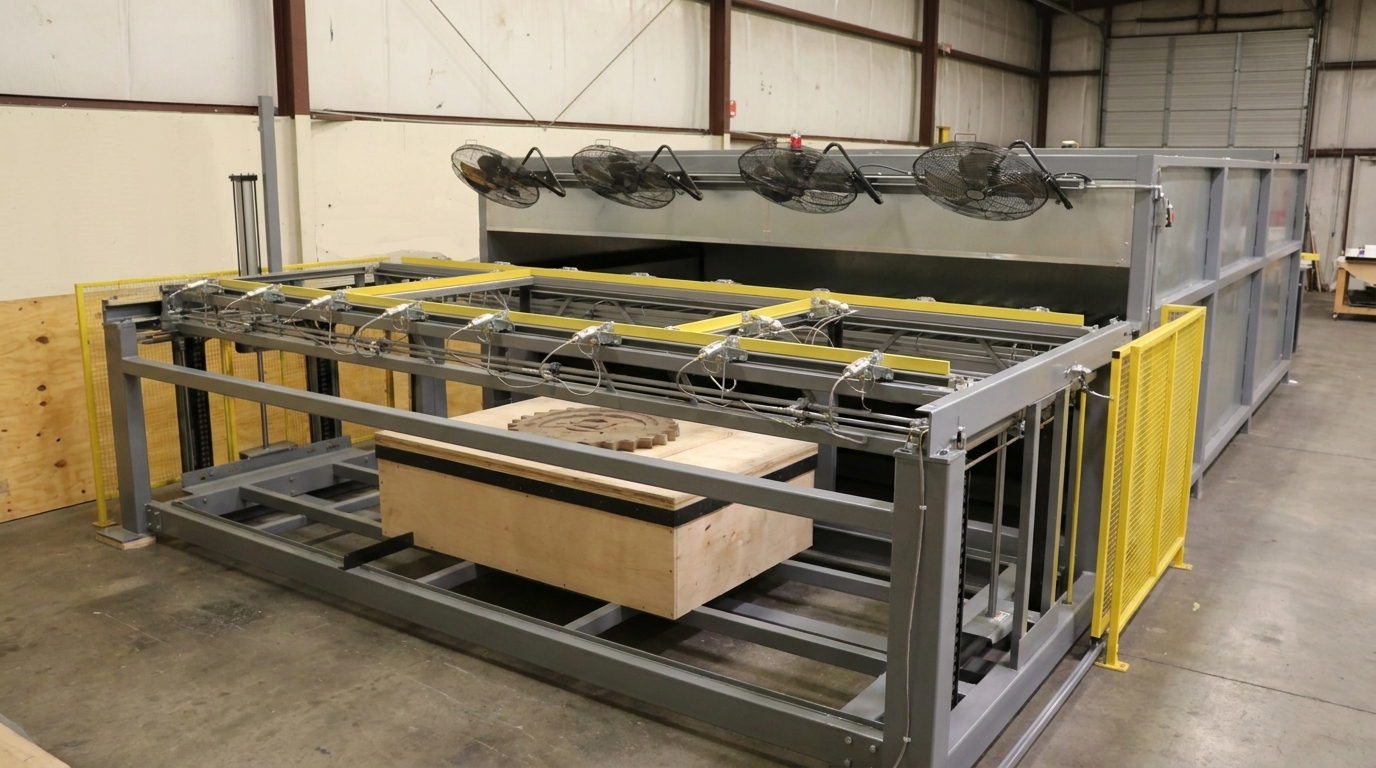
This only works when the machine has the platen size and vacuum capacity to pull the full part in a single draw. Our custom large-format machines are built around exactly this problem, sized for the largest single-piece parts a shop needs rather than forcing a design down to fit standard equipment.
Single-Part vs. Multi-Panel: Where the Difference Shows Up
The comparison isn’t just aesthetic. It shows up across cost, durability, and production time in ways that compound over a product’s life.
| Factor | Single-part forming | Multi-panel assembly |
|---|---|---|
| Water and weather sealing | No seams, nothing to seal or maintain | Every joint is a potential leak path requiring sealant or gasketing |
| Structural integrity | Continuous material carries load evenly | Fasteners and joints concentrate stress at panel edges |
| Assembly labor | Part is finish-ready after trimming | Requires joining, aligning, and finishing seams before the part is complete |
| Finish quality | Uniform surface with no visible break lines | Seam lines and color or texture mismatch at joints are common |
| Long-term reliability | Fewer failure points over years of use | Seams are the first place cracking or separation shows up under stress |
None of this means multi-panel assembly is always the wrong call. Some parts genuinely need to ship flat and assemble on site, or exceed what any single machine can form. The problem is when panel splits happen by default, not by design, because the equipment sets the limit instead of the part.
What to Ask Before Accepting a Seam
Before specifying a multi-panel build, it’s worth confirming whether the split is actually necessary or just what the current supplier’s equipment allows. A machine with a larger platen and stronger vacuum capacity can often take a part that’s always been built in sections and form it as one piece, cutting assembly time and removing the failure point at the same time.
Sizing Equipment Around the Part, Not the Other Way Around
Every manufacturer weighing single-part versus multi-panel design is really asking whether their equipment fits their parts, or their parts have been redesigned to fit their equipment. That’s a machine capacity question first, and a design question second. Belovac has built thermoforming equipment in Banning, California since 1984, and financing through Univest Capital is available for shops weighing a large-format purchase against the ongoing cost of seams, assembly labor, and warranty claims on split-panel parts.
Request a quote and we’ll help you confirm whether your current multi-panel parts could be formed as a single piece on the right machine.