

Whether you work in pharmaceutical manufacturing, consumer goods, or medical devices, the blister pack remains one of the most practical and cost-effective packaging formats available. This guide covers what blister packs are, how they work, the materials and types in use today, and how to verify, select, and design them for real-world production.
What is a Blister Pack and Why Is It So Widely Used?
A blister pack is a type of pre-formed plastic packaging where individual items sit in shaped cavities (sometimes called pockets) and are sealed to a backing of paperboard, plastic film, or aluminum foil. Blister packs are transparent, allowing for easy product viewing, which is why they dominate retail shelves and pharmacy counters alike. They are made from materials like PVC and aluminum, depending on the barrier and cost requirements of the product inside.
Blister packaging uses a thermoformed plastic “blister” sealed to a backing material. In thermoforming, a plastic web is heated and stretched into a mold to create cavities. Cold forming presses aluminum-based laminate into shape at ambient temperature without heat. Both methods result in individual compartments that hold and protect a single item or dose.
Blister packs are widely used in pharmaceuticals, food, and consumer goods industries. In pharmaceuticals, they are the standard for unit-dose packaging of tablets, capsules, and lozenges. Consumer goods often packaged in blister packs include razors and toothbrushes, along with batteries, toys, and small electronics. Food items often packaged in blister packs include chewing gum and single-serving snacks. The format excels at protecting products from environmental damage while providing tamper resistance for pharmaceuticals.
Here is what makes blister packaging so broadly adopted:
- Pharmaceutical blister packs protect against humidity and contamination, making them preferred over bottles for many solid oral doses.
- Blister packs help manage dosage and improve medication adherence by letting patients and caregivers track which doses have been taken.
- Blister packs provide tamper resistance for pharmaceuticals, giving both regulators and patients confidence in product integrity.
- The cavity-and-backing structure supports a variety of closure styles, from push-through foils to child-resistant peelable films.
- Material choices must align with regulatory standards. The U.S. FDA container-closure systems guidance explicitly covers blister formats and sets expectations for barrier performance, stability, and compatibility.
This article also covers performing security verification on blister lines and how to document that verification is successful for audits and quality systems. Later sections address specific types of blister packaging, material selection for pharmaceutical blister packs, and practical tips for engineers and buyers.
How Does Blister Packaging Work in Practice?
The blister packaging process follows a defined sequence of steps on a production line, from raw material to finished pack. Here is how that process works and what controls keep it reliable.
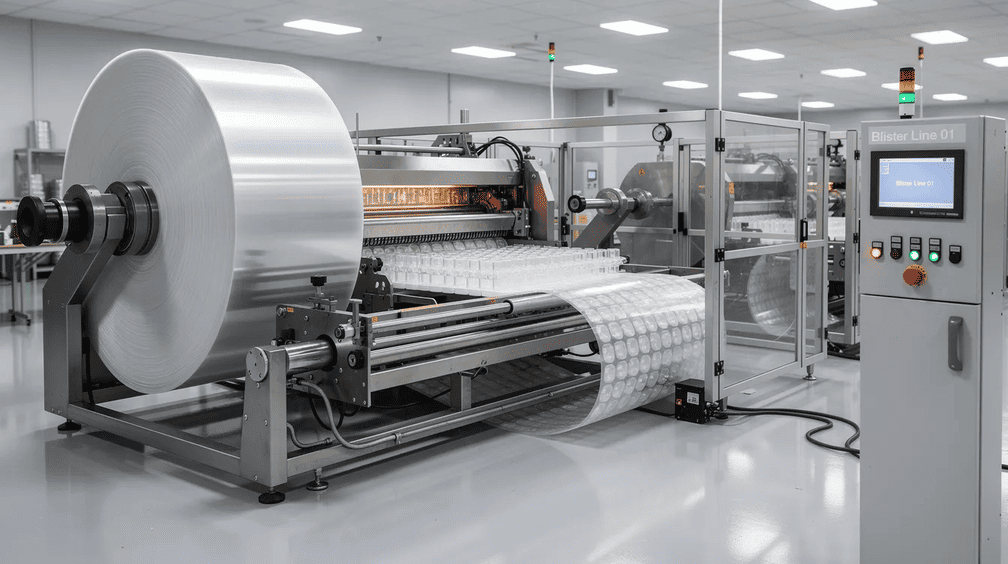
- Unwinding the forming web. Roll stock, either plastic film for thermoforming or laminated foil for cold forming, is unwound, tensioned, and aligned. Material lot numbers are tracked for traceability.
- Forming cavities. At the forming station, plastic is heated and drawn into a mold (thermoforming) or foil laminate is mechanically pressed into shape (cold forming). Each cavity or pocket matches the geometry of the product it will hold.
- Filling. Tablets, capsules, or other items are placed into cavities using vibratory feeders, brush-box feeders, or pick-and-place systems. Accurate counting is critical, especially for pharmaceutical production.
- Sealing. A lidding material, typically foil or film, is sealed over the filled cavities using controlled heat, pressure, and dwell time. The seal must be hermetic or tamper-evident, depending on the application.
- Printing and coding. Batch numbers, expiry dates, drug names, and serialization codes are printed or applied. OCR/OCV vision systems check for accuracy in real time.
- Cutting and finishing. The sealed web is die-cut into individual blister cards, strips, or calendar layouts. Retail formats may include hanger slots or perforations.
Sealing parameters (temperature, dwell time, pressure) are validated and monitored continuously, particularly for pharmaceutical blister packs where seal integrity is required by GMP standards. In-line inspection and security verification systems use vision cameras to detect missing tablets, broken units, misprints, and incorrect codes, plus mechanical sensors to flag open or malformed blisters.
High-speed automated blister packaging lines result in lower costs for large-scale production. Typical pharmaceutical rotary systems run at 200 to 600 blisters per minute, with high-end configurations like the Uhlmann BEC 700 reaching up to 700 blisters per minute in three-lane operation. Throughput depends on the forming material, cavity depth, and the number of in-line inspection modules.

Backing materials for pharmaceutical applications are typically aluminum foil with heat-seal lacquer, while retail blister packs use printed paperboard cards. Closures range from push-through foils to peelable films and child-resistant structures, depending on the target user and regulatory requirements.
What Are the Main Types of Blister Packaging Used Today?
Blister packaging comes in several types, each suited to a different product category, barrier requirement, and price point. The table below compares the most common formats, followed by a closer look at retail, pharmaceutical, and specialty variants.
| Type | Typical Materials | Common Products | Cost Level | Key Advantages / Tradeoffs |
|---|---|---|---|---|
| Face-seal blister (retail) | PVC forming web + printed card | Electronics, batteries, toys | Entry to mid | Low cost, high visibility; limited barrier |
| Full-face seal blister | Plastic forming + card covering most of front | Consumer goods, display items | Mid | Strong protection; larger card size |
| Trap blister | Plastic trapped between two cards | Flat tools, accessories | Entry | No heat seal needed; minimal tamper evidence |
| Slide/slider card blister | Plastic sleeve over card | Razor blades, small accessories | Mid | Reclosable access; more complex tooling |
| Unit-dose thermoform blister (pharma) | PVC or PVC/PVDC + aluminum lidding foil | Tablets, capsules | Mid | Transparent; cost-efficient; barrier depends on coatings |
| Cold form foil blister (Alu-Alu) | OPA/AL/PVC laminate | Hygroscopic or light-sensitive APIs | Premium | Near-absolute barrier; opaque; slower forming |
| Adherence calendar card | Thermoformed or cold-formed, multi-day layout | Multi-dose medication regimens | Mid to premium | Improves compliance; complex design and validation |
| Medical device tray | Rigid plastic tray + peelable sterile lid | Surgical kits, implants, syringes | Premium | Sterile, durable; strict regulatory controls |
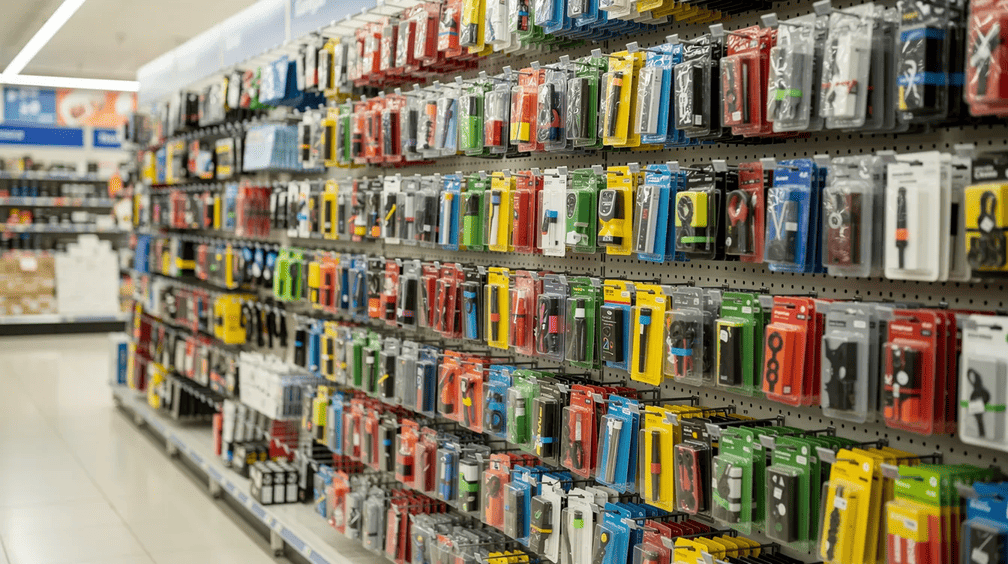
Retail blister formats prioritize shelf appeal and product visibility. Blister packs allow consumers to see the actual product before purchase, which is why face-seal and full-face seal designs dominate supermarket aisles. Blister packs can be designed with various hanging options for retail, including Euro slot and round hole configurations so products can hang on pegboard displays and be displayed at eye level. Blister packs also prevent theft and damage in small electronics packaging, where the rigid cavity and sealed backing deter tampering. Blister packaging is one of the most cost-effective packaging methods for consumer goods, combining protection with a clear view of the item inside.
On the pharmaceutical side, a variety of formats exists. Unit-dose blister cards with thermoformed cavities and lidding foil are the most common for tablets and capsules. Strip packs form around the product during sealing without pre-formed cavities. Multi-dose adherence cards arrange pills by day and time in calendar layouts of 7, 14, 28, or 90 days.
Thermoformed blister trays are used for packaging medical devices such as surgical instruments, syringes, and implants. Medical blister trays are used for sterile medical devices in hospitals, with thicker plastic and peelable sterile lidding films that maintain sterility until the moment of use. Cold form foil blisters sacrifice transparency but deliver near-complete protection for moisture-sensitive and light sensitive products.
Medical device blister trays rely on the same sterile barrier system principles used across sterile medical packaging.
What Materials Are Used in Pharmaceutical Blister Packs and Why?
Pharmaceutical blister packs rely on carefully selected materials for the forming web and the lidding film, balancing cost, thermoformability, and barrier properties. Every material must comply with regulatory standards such as 21 CFR 211.94, which requires containers and closures to protect against external factors that could cause deterioration or contamination, and not to react with or absorb the drug in contact with them.
PVC is a common material for blister packaging due to low cost. It thermoforms easily, provides rigidity for push-through dispensing, and is typically used at thicknesses of 200 to 300 micrometers. Its limitation is a comparatively poor moisture and oxygen barrier, making it insufficient on its own for humidity-sensitive drugs.
Coated structures improve on base PVC:
- PVC/PVDC coatings add a layer of polyvinylidene chloride, with coat weight expressed in g/m². Higher weights mean lower moisture and oxygen permeation. These duplex and triplex films are common for tablets that need moderate barrier protection.
- PCTFE (polychlorotrifluoroethylene) laminates offer very low water vapor transmission, ideal for hygroscopic active ingredients.
- COC (cyclic olefin copolymer) provides high clarity and improved barrier versus plain PVC, used where visible product appearance matters.
- Cold form foil, built from OPA/AL/PVC laminates with a 45 to 60 micrometer aluminum core, provides near-hermetic protection. Opaque blisters protect light-sensitive products from UV rays and block virtually all moisture and oxygen. Total laminate thickness runs 130 to 160 micrometers. The tradeoff: loss of transparency, slower forming speeds, and higher price.
On the lidding side, aluminum push-through foil with a heat-seal lacquer matched to the forming web is standard. Paper/foil/film laminates serve child-resistant or peel-push structures. Printed foils carry batch numbers, expiry dates, and serialization codes.
Material selection must account for the product’s target markets, climate zones (per ICH stability guidelines), and the results of extractables and leachables studies. Getting this right is essential to protect light sensitive products and maintain shelf life across distribution channels.
These material choices must also satisfy broader pharmaceutical packaging regulations governing container-closure integrity.
How Are Blister Packs Used for Unit-Dose and Adherence Packaging?
This section focuses on how blister packs support medication safety, adherence, and distribution across hospitals, pharmacies, and home care.
Blister packs are used for unit-dose pharmaceutical packaging, where each cavity contains a single tablet, capsule, or lozenge. This format reduces dispensing errors, makes tracking easier, and cuts product waste. Blister packs are commonly used for over-the-counter products in pharmacies, where patients can check their dose history at a glance.
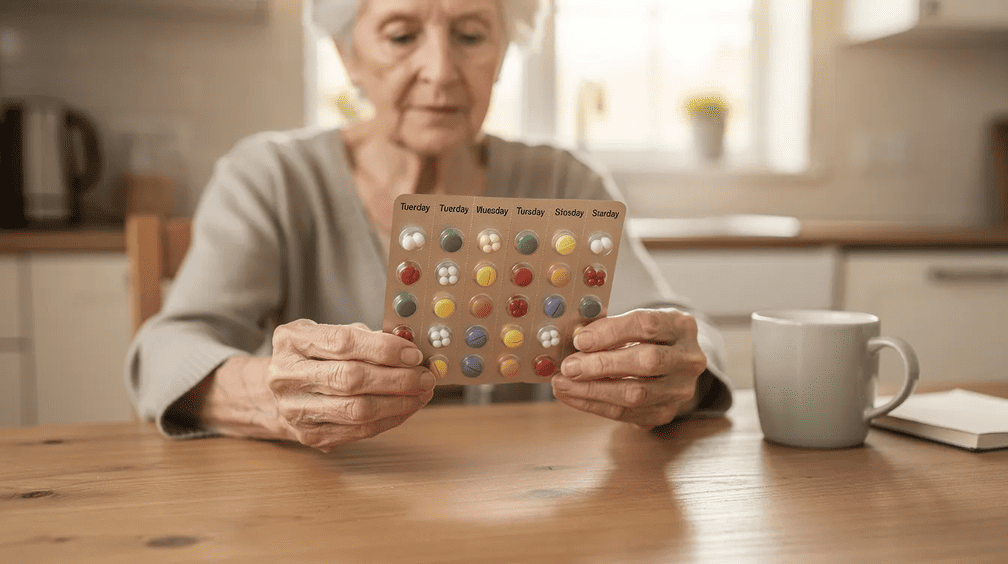
Calendar and adherence blister cards organize medication by day and time. Layouts of 7, 14, 28, and 90 days are common in community pharmacies, assisted-living facilities, and home-care programs. Printed days-of-the-week and dosing time indicators guide patients through complex regimens, making it simpler to manage pills across extended periods. Blister packs ensure product integrity and shelf life for each dose, since every cavity remains sealed until the moment of use.
Cold-seal medication blister cards offer a heat-free alternative. These one-piece disposable cards do not require sealing equipment, making them practical for pharmacists and caregivers who repackage medication for individual patients. They are typically available in multi-pack formats for 90-day dispensing cycles.
Multi-dose blister packs hold several medications in each pocket, arranged by time of day. These differ from single-dose designs in labeling complexity and cross-contamination risk management. Refill blister cards and accessories such as blister pack openers designed for seniors and patients with reduced dexterity also influence packaging design, forcing engineers to balance easy-open features against child-resistant requirements.
Pharmaceutical blister packs support traceability with printed lot numbers, expiry dates, and sometimes serialized 2D codes on every blister card. This traceability layer counts as part of the broader security verification framework that regulators increasingly require.
How Is Security Verification Performed on Blister Packaging Lines?
Security verification on blister packaging lines is a layered process that combines physical protection, data integrity, and documented process controls. It goes beyond simple tamper evidence to encompass everything from seal integrity to code accuracy and cybersecurity of networked hardware.
In practice, security verification covers three areas: physical protection (tamper evidence, seal integrity), data and code verification (serialization, barcodes, human-readable text), and process controls documented for GMP and quality audits. Every check must produce auditable records that confirm the security of the finished product.
Here is what the typical verification workflow looks like:
- In-line cameras performing OCR/OCV confirm the correct product name, strength, and batch on the foil or card. The system verifies that all relevant information matches the production order.
- Code readers check 2D DataMatrix or linear barcodes against the production order, flagging mismatches immediately.
- Vision systems confirm presence of each tablet and detect broken or chipped units in every cavity.
- Performing security verification also includes confirming that the correct forming web and lidding foil lot numbers are loaded, that sealing temperatures and pressures stay within validated limits, and that tamper-evident features such as perforations or embossing are present and legible.
- When a batch passes all checks, the verification successful event is logged in the line’s HMI or MES with electronic records that are time-stamped and signed according to data-integrity guidelines such as 21 CFR Part 11.
For child-resistant and senior-friendly blister packs, opening-force measurements and panel testing are periodically repeated and documented as part of ongoing verification.
On the cybersecurity side, networked blister line controllers require access control, electronic signatures, and periodic security reviews. When a user or system accesses an online verification portal or batch record page, the security service may respond with a ray id or session identifier that auditors can trace. This protects the system against unauthorized access and malicious bots that could compromise data integrity. Each bot detection layer verifies that only authorized personnel and systems interact with production records, whether on the factory floor or through a website-based reporting interface.
How Do You Choose and Configure Blister Packaging Equipment?
Selecting blister packaging equipment is a decision that shapes your production capabilities for years. Engineers, operations managers, and buyers need to weigh product requirements, output targets, regulatory context, and long-term flexibility before committing.
Key decision factors:
- Product type. Solid oral dose, medical device, or consumer good. Each demands different cavity depths, forming materials, and feeding mechanisms.
- Required output. Target blisters per minute, batches per year, number of SKUs, and changeover frequency.
- Pack format. Card size, number of cavities, calendar layouts, or retail display configurations with parts for hanging and perforation.
- Regulatory environment. Pharmaceutical GMP, serialization mandates (DSCSA, FMD), and container closure integrity testing drive equipment requirements.
Flat-plate blister machines suit lower to medium speeds (80 to 300 blisters per minute) with flexible format changes, making them ideal for smaller batches or frequent changeovers. Rotary systems handle high-speed, high-volume production at 300 to 700 blisters per minute but require more investment and longer changeover times. In GMP pharmaceutical use, effective throughput is commonly 70 to 85 percent of rated speed due to changeovers, stoppages, and inspection.
Configuration elements include feeder type (vibratory, brush-box, or dedicated feeders for capsules versus tablets), print and inspection modules (thermal inkjet or laser coders, camera-based verification), and downstream integration with cartoning and case-packing equipment.
Industries outside pharma, including aerospace, electronics, and automotive, use blister packs for small component kitting. These applications often call for thicker material, custom mold geometries, and different tray designs compared with pharmaceutical blister packs.
On lead times: tooling and format parts are typically measured in weeks, often 8 to 16 weeks or more depending on complexity. Custom forming molds, artwork approvals, and validation batches add further time. Waiting for tooling is one of the most common sources of project delay, so plan accordingly and align machine selection with long-term portfolio plans, including potential for new cavity layouts, new forming materials, and serialization upgrades. The price of the equipment should reflect not just today’s needs but also future flexibility.
What Are the Key Design Tips and Best Practices for Blister Packs?
Good blister pack design starts with the product and works outward to the user, the production line, and the regulatory environment. Here are specific, practical guidelines that prevent common mistakes and reduce rework.
- Design the cavity around the product. Match cavity shape to tablet or capsule geometry to minimize movement and abrasion. Allow for batch-to-batch tolerances in tablet thickness and diameter so the product seats consistently without jamming or rattling.
- Tune push-through force for target users. If the pack is intended for seniors, lower the push-through force or use peelable lidding. For general adult use, standard push-through foil works well. Child-resistant formats require higher forces or multi-step open mechanisms, but test usability with real users early.
- Lay out artwork with regulatory items first. Reserve space for drug name, strength, batch, expiry, and storage conditions before adding marketing graphics. Plan for human- and machine-readable codes without crowding essential text, and keep critical markings away from perforations or fold lines.
- Consider sustainability. Where barrier requirements are modest, reduce plastic gauge or use recyclable plastics combined with paperboard. Retail blister packs can sometimes be designed for material separation at end of life. Recognize, though, that child-resistance and high-barrier needs often conflict with material reduction.
- Design for manufacturability. Avoid undercuts and overly deep draws that complicate thermoforming and thin the cavity walls. Keep card and cavity dimensions within standard tooling ranges to lower cost. Hangers and perforations should not compromise card stiffness or seal area.
Consider a concrete example: designing a 28-day adherence card for an elderly patient taking two tablets in the morning and one at night. The cavity shapes must accommodate two tablet sizes (one oblong, one round). The card must include day and time indicators, batch and expiry markings, and a DataMatrix code per row. If using thermoformed PVC/PVDC, confirm that cavity depth allows full seating of the larger tablet. Choose a lidding foil that seals at temperatures low enough to avoid crushing fragile tablets. Set push-through force so the evening tablet, often larger, remains extractable without excessive effort. Run a pilot batch to confirm seal integrity, print legibility, and usability before committing to full-scale production. Document results on every page of your design verification file.
Conclusion: Where Is Blister Packaging Headed Next?
Blister packs remain central to pharmaceutical, medical, and retail packaging because they combine protection, visibility, and precise dosing in a compact format. Blister packaging is cost-effective for retail consumer goods and indispensable for pharmaceutical applications where every dose matters.
Several trends are accelerating. High-barrier and recyclable films are gaining ground as sustainability pressures mount. Digital features like QR codes, printed electronics, and RFID for adherence tracking are moving from pilot projects to production. Automated inspection and security verification continue to tighten as regulations demand more documentation and traceability across every step of production.
If you have not revisited your blister packaging choices recently, now is a good time. Evaluate your material selections against current barrier data, check whether your equipment can support upcoming serialization mandates, and confirm that your verification workflows meet the latest data-integrity expectations. Consulting your internal packaging engineering resources or industry-specific technical references will help you align today’s packaging architecture with the requirements already on the horizon.