
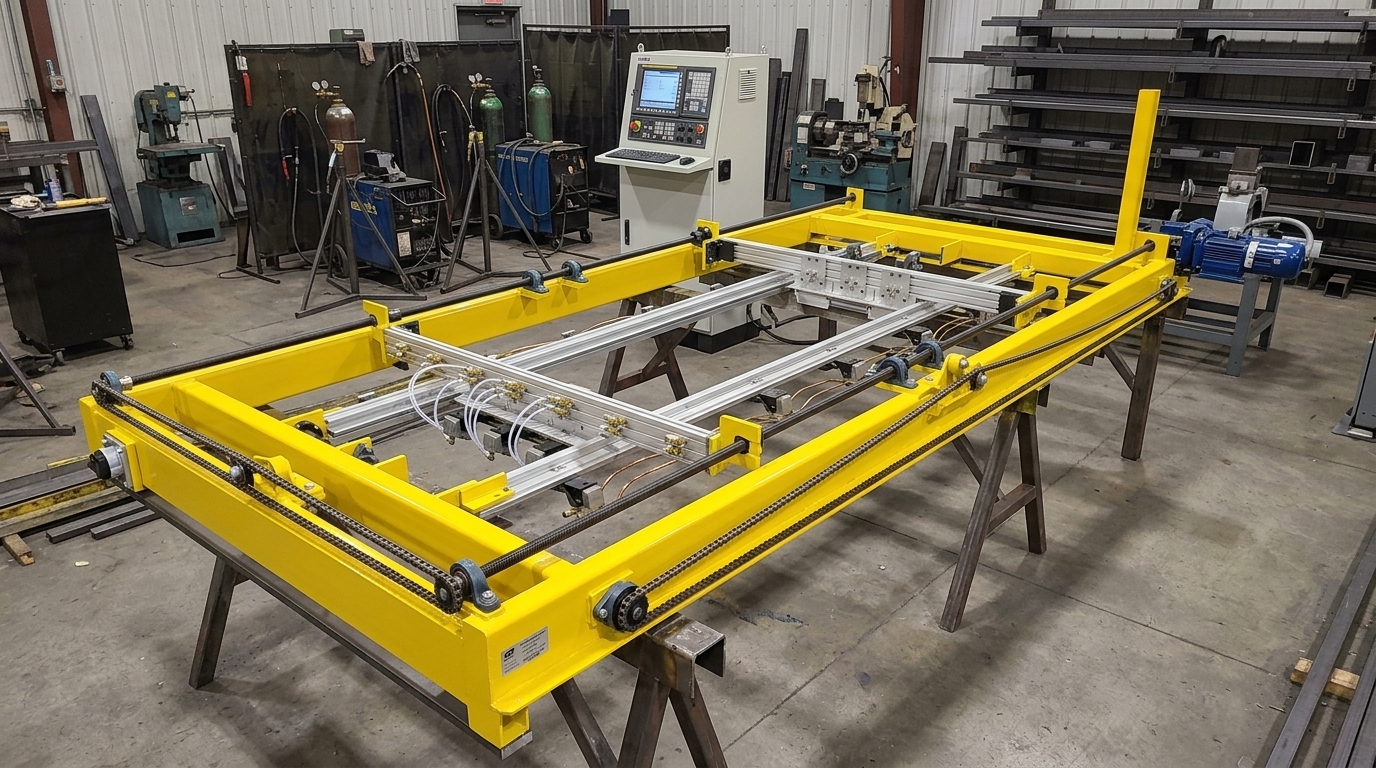
Clamp frame height rarely shows up in equipment comparisons, but it sets a hard limit on how deep a part can be pulled before the sheet lifts off the seal or the mold simply can’t clear the frame. A machine can have strong vacuum and generous platen travel and still fail a deep part if the clamp frame wasn’t built with that depth in mind.
Why Clamp Frame Height Matters on a Deep Draw
The clamp frame holds the sheet flat and sealed against vacuum loss while forming happens below it. On a shallow part, frame height barely factors in because the mold sits well within the frame’s working clearance. On a deep draw, the mold itself takes up more of that vertical space, and a low-clearance frame can force the mold to sit closer to the sheet than the forming process allows, or bottom out against the frame before the part reaches full depth.
A frame sized too short for deep work also affects seal integrity. As platen travel increases, the sheet has to maintain a consistent seal across a longer vertical pull, and a frame that wasn’t designed with that range in mind is more prone to vacuum leaks at the clamp edge exactly when full seal pressure matters most.
Where This Gets Missed in Machine Comparisons
Sheet size, vacuum rating, and platen travel dominate spec sheet comparisons, while clamp frame height is often left out entirely or buried in a mechanical drawing most buyers never review. A shop can confirm platen travel supports a deep part and still run into a frame clearance issue once the actual mold is installed. Our large format vacuum forming machines are built with clamp frame height matched to the draw depths large-format parts require, rather than a frame sized for shallow trays and stretched to cover deeper work.
What to Check Before Assuming Frame Height Is Adequate
Confirming clamp frame height fits a deep-draw job means looking past the headline platen and vacuum specs.
| What to check | Why it matters for deep draws |
|---|---|
| Clamp frame clearance height | Sets the physical limit on how tall a mold can sit before it bottoms out against the frame |
| Mold height at full draw depth | Deep molds take up more vertical space; frame clearance has to exceed mold height, not just match it |
| Seal consistency across platen travel | Longer pulls need a frame designed to hold seal integrity through the full range of travel, not just at rest |
| Frame-to-platen alignment at depth | Misalignment becomes more likely to affect the part as travel distance increases |
| Tooling swap clearance | Taller molds for deep parts need enough frame clearance to load and remove without forcing the frame open further than rated |
Shops that skip this check tend to find out once a deep mold is built and installed, when the frame doesn’t clear the tooling or seal quality drops off partway through the draw.
Confirming Frame Height Before Tooling Is Built
Every shop planning a deep-draw part on a large format machine is really asking whether the clamp frame was built for that depth, or whether it was sized for shallower work and is now being asked to stretch. That’s worth confirming against the mold’s actual dimensions before tooling is cut, not after. Belovac has built thermoforming equipment in Banning, California since 1984, and financing through Univest Capital is available for shops weighing a large-format purchase against the cost of rework from frame clearance issues discovered mid-production.
Request a quote and we’ll help you confirm the clamp frame height your deep-draw parts actually require before you commit to equipment.