
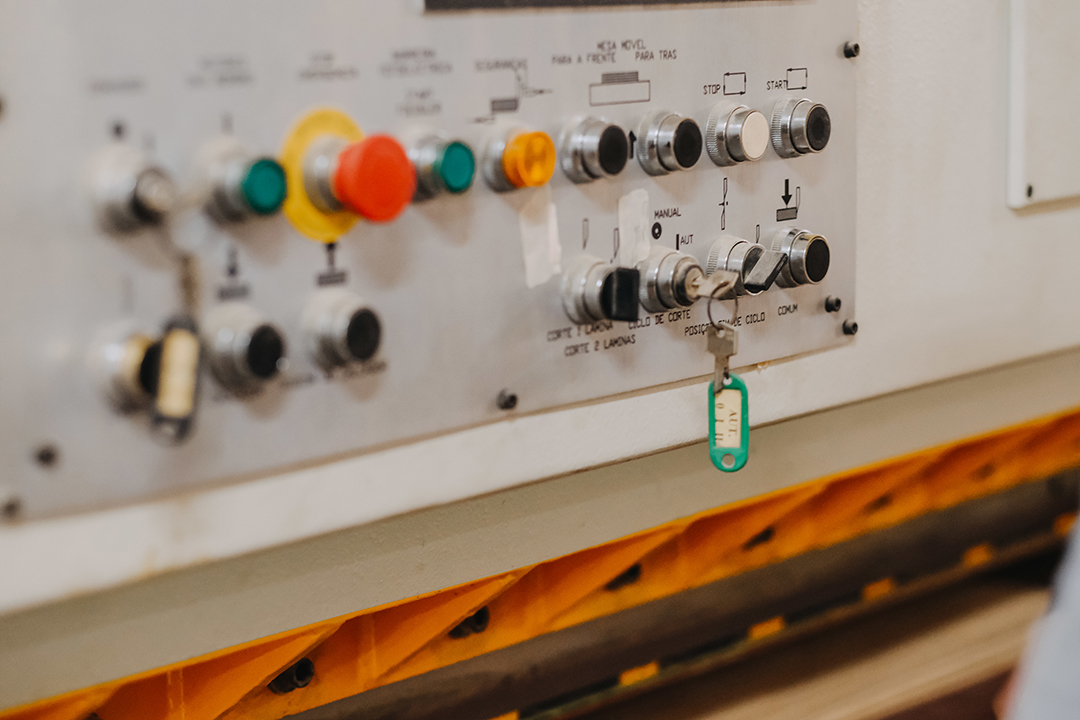
Manufacturers across industries are under pressure to reduce costs, improve sustainability, and maintain consistent product quality. A significant contributor to inefficiency in production is material waste, often resulting from inaccurate processes, outdated equipment, or a lack of system integration. High precision PLC control has emerged as a reliable solution to address these challenges, providing manufacturers with tighter process management, greater repeatability, and improved efficiency. By integrating programmable logic controllers with advanced feedback mechanisms, production systems achieve reduced scrap rates while maintaining consistent throughput.
Understanding High Precision PLC Control in Modern Production
Programmable logic controllers, or PLCs, are digital computing devices designed to automate industrial processes. When equipped with high precision control, these systems allow manufacturers to manage parameters such as temperature, pressure, motion, and timing with exceptional accuracy. Unlike manual methods or older control systems, PLCs integrate seamlessly with sensors and actuators to adjust operations in real time. The result is minimized deviation from target specifications, leading to reduced off-spec materials and improved consistency across production runs.
The introduction of PLC control has shifted manufacturing from reactive correction to proactive management. By continuously monitoring key variables, these systems identify irregularities before they escalate into defects, ensuring that material waste is significantly minimized. In high-volume operations such as thermoforming and vacuum forming, this accuracy is vital, as even minor inconsistencies can result in large quantities of scrap material.
Key Drivers of Material Waste in Production
Before exploring how PLC systems minimize waste, it is important to recognize the common sources of inefficiency within production facilities. These challenges include:
- Inaccurate heating or cooling cycles that lead to defective materials
- Misaligned equipment settings during changeovers
- Human error in manual adjustments and monitoring
- Process instability due to fluctuating raw material properties
- Overproduction or excessive trimming during forming processes
Each of these issues contributes to unnecessary scrap, directly increasing operational costs. High precision PLC control addresses these drivers by enabling automated monitoring, precise repeatability, and consistent data-driven decision-making.
How High Precision PLC Control Minimizes Scrap
Reducing scrap in production depends on precise control of every stage. High precision PLC systems make this possible by synchronizing processes, enabling real-time corrections, and ensuring repeatability. The following points show how these controls directly cut waste.
Accurate Process Synchronization
Production processes rely heavily on synchronization between heating, forming, cutting, and cooling. Any mismatch between these stages can result in incomplete or defective products. High precision PLC control ensures that all stages operate in perfect alignment, reducing the risk of uneven results and minimizing waste.
Real-Time Data and Adjustments
Modern PLCs are capable of analyzing process data in real time. When sensors detect deviations, the PLC initiates immediate corrective actions without requiring manual intervention. For example, in thermoforming, accurate temperature control prevents material warping or uneven thickness, saving both raw material and energy.
Automated Repeatability
Consistency is central to high-volume production. PLC-driven machines are programmed to reproduce exact settings across multiple cycles, ensuring that every batch matches the required quality standards. This repeatability reduces trial-and-error adjustments, preventing scrap generated during setup.
Precision in Heavy Gauge Forming
In industries that use heavy-gauge plastics, incorrect heating often leads to incomplete forming or material tearing. High precision PLC control, with zoned heating and programmable profiles, ensures uniform heat distribution and controlled forming pressure, significantly reducing scrap levels in these demanding applications.
Applications Across Manufacturing Sectors
High precision PLC control benefits a wide range of industries, particularly those that require consistency in forming, cutting, and assembly. Some notable applications include:
- Automotive Manufacturing – Ensuring precise fit and finish in plastic interior panels and exterior components.
- Medical Device Production – Maintaining strict quality standards where defective parts cannot be reused.
- Packaging Industry – Reducing over-trimming and minimizing material use in high-volume packaging runs.
- Consumer Products – Achieving uniform aesthetics and durability in items such as displays and signage.
- Construction Materials – Producing durable skylights, panels, and insulation components with minimal waste.
By applying advanced PLC control, each of these industries achieves better yield and reduced material loss, improving both profitability and sustainability.
Integration with Thermoforming and Vacuum Forming Equipment
Thermoforming and vacuum forming are processes where precision is critical. A minor variation in heating time or forming pressure can lead to warped parts, surface blemishes, or wasted plastic sheets. High precision PLC control transforms these processes by delivering:
- Zoned Heating Control – Adjusting temperature precisely across different areas of a sheet for uniform forming.
- Motion Control Accuracy – Regulating mold movement and vacuum pressure to eliminate defects.
- Energy Efficiency – Reducing unnecessary heating cycles, lowering operating costs while minimizing scrap.
By implementing advanced control systems, manufacturers can optimize cycle times and improve part accuracy, leading to higher output with fewer rejected parts.
Advantages of Adopting High Precision PLC Systems
Beyond waste reduction, high precision PLC control delivers several operational and business advantages that benefit production facilities:
| Benefit | Impact on Production |
| Reduced Scrap Rates | Lower material costs and improved profitability |
| Consistent Quality | Improved customer satisfaction and reduced returns |
| Faster Setup Times | Minimized downtime during product changeovers |
| Data-Driven Control | Process optimization through analytics and reporting |
| Energy Savings | Reduced operating expenses and sustainable production |
Future Outlook of High Precision PLC Control
The role of PLC systems is expanding as Industry 4.0 and smart manufacturing gain momentum. The integration of high precision PLC control with advanced technologies such as IoT, AI-driven analytics, and cloud-based monitoring is paving the way for predictive maintenance and adaptive production strategies. These innovations will further reduce waste by anticipating failures before they occur and optimizing energy and material use in real time.
Recent research on Industry 4.0 highlights how technologies, including AI, IIoT, digital twins, and advanced data analytics, enhance sustainability by driving waste minimization, resource efficiency, and closed-loop manufacturing. These findings reinforce the potential of high precision PLC systems as a foundation for predictive and adaptive control, allowing manufacturers to achieve greater efficiency while supporting long-term sustainability goals.
In thermoforming and vacuum forming, these advancements will allow manufacturers to achieve tighter tolerances, reduce downtime, and deliver products that meet increasingly strict industry standards. As adoption grows, PLC-enabled systems will not only minimize scrap but also position manufacturers to remain competitive in a more connected and sustainability-driven global market.
Explore High Precision PLC Solutions for Waste Reduction with Belovac Today
For over 30 years, Belovac has delivered advanced thermoforming and vacuum forming machines designed to reduce scrap and improve production efficiency. Each system integrates high precision PLC control, ensuring manufacturers gain both process reliability and material savings.
- Customizable Equipment – Tailored configurations to match specific production requirements
- Advanced PLC Control – Accurate process management that minimizes scrap and maintains quality
- Dual Heat Capabilities – Faster heating cycles for heavy gauge and complex materials
- Automation Options – From entry-level manual machines to fully automated roll-fed systems
- Industry Versatility – Serving automotive, medical, signage, spa, and large-scale industrial sectors
Belovac machines are engineered in the USA to support manufacturers aiming to lower costs, streamline production, and achieve consistent product quality.
Take the next step toward precision-driven manufacturing. Contact us today to discuss your project and request a custom quote.