
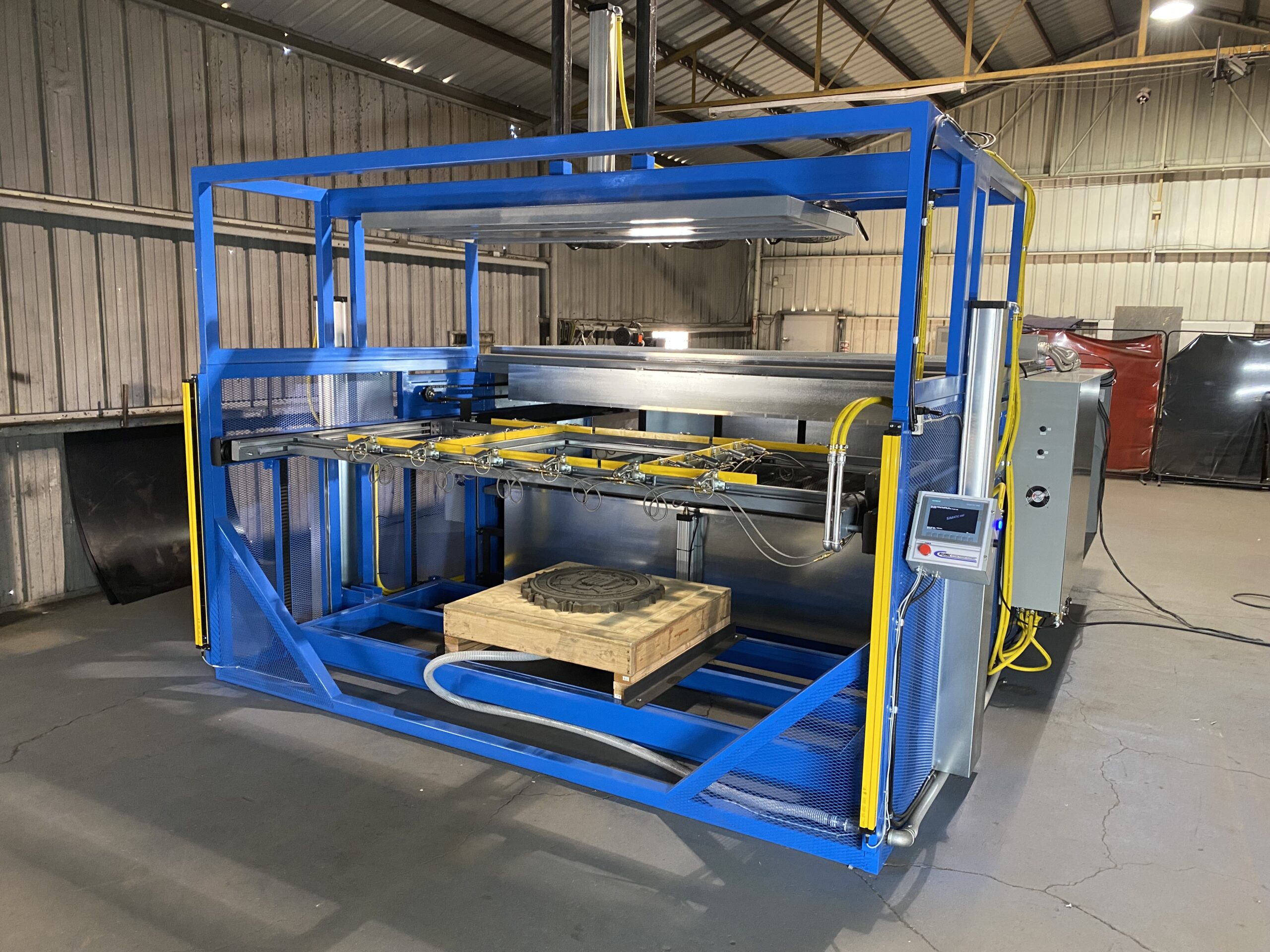
What is Mold Press Technology?
Mold press technology is an advanced manufacturing technique used to shape and form materials into specific shapes or components. This process involves applying pressure to a material, typically in a mold, to create products with intricate designs and high precision.
Applications of Mold Press Technology
Mold press technology is widely used in industries such as automotive, aerospace, medical devices, electronics, and consumer goods. It allows for the creation of parts with complex geometries, tight tolerances, and uniform consistency. Some common applications include:
- Automotive components (e.g., dashboards, trim pieces)
- Aerospace parts (e.g., airframe structures, brackets)
- Medical devices (e.g., implants, surgical tools)
- Electronics (e.g., connectors, enclosures)
- Consumer goods (e.g., household items, toys)
Benefits of Mold Press Technology
- High Precision: Mold press technology allows for the production of highly detailed and accurate components with minimal tolerance errors.
- Consistency: It ensures uniformity in the production of parts, reducing variability and improving overall quality.
- Efficiency: The process is fast, which is ideal for high-volume manufacturing.
- Cost-Effective: Once the mold is created, producing parts in large quantities becomes cost-effective.
- Versatility: It can work with a wide variety of materials, including metals, plastics, and composites.
Challenges in Mold Press Technology
While mold press technology offers numerous advantages, it does come with challenges. These include:
- Initial Setup Cost: Creating molds can be expensive, particularly for complex parts.
- Material Limitations: Some materials may not perform well under the pressure of the molding process.
- Wear and Tear: Molds can wear out over time, requiring periodic maintenance or replacement.
Future of Mold Press Technology
As technology advances, mold press technology continues to evolve. The integration of automation, improved materials, and more precise machines is driving the industry forward. Future developments are likely to focus on:
- Enhanced material capabilities, including the use of composites and advanced alloys.
- Greater automation to improve efficiency and reduce labor costs.
- Improved mold design and materials to extend the lifespan of molds.
Conclusion
Mold press technology plays a crucial role in modern manufacturing, offering numerous benefits such as precision, consistency, and efficiency. As industries continue to demand higher-quality components, mold press technology will remain a key process for producing complex parts in a variety of fields.