
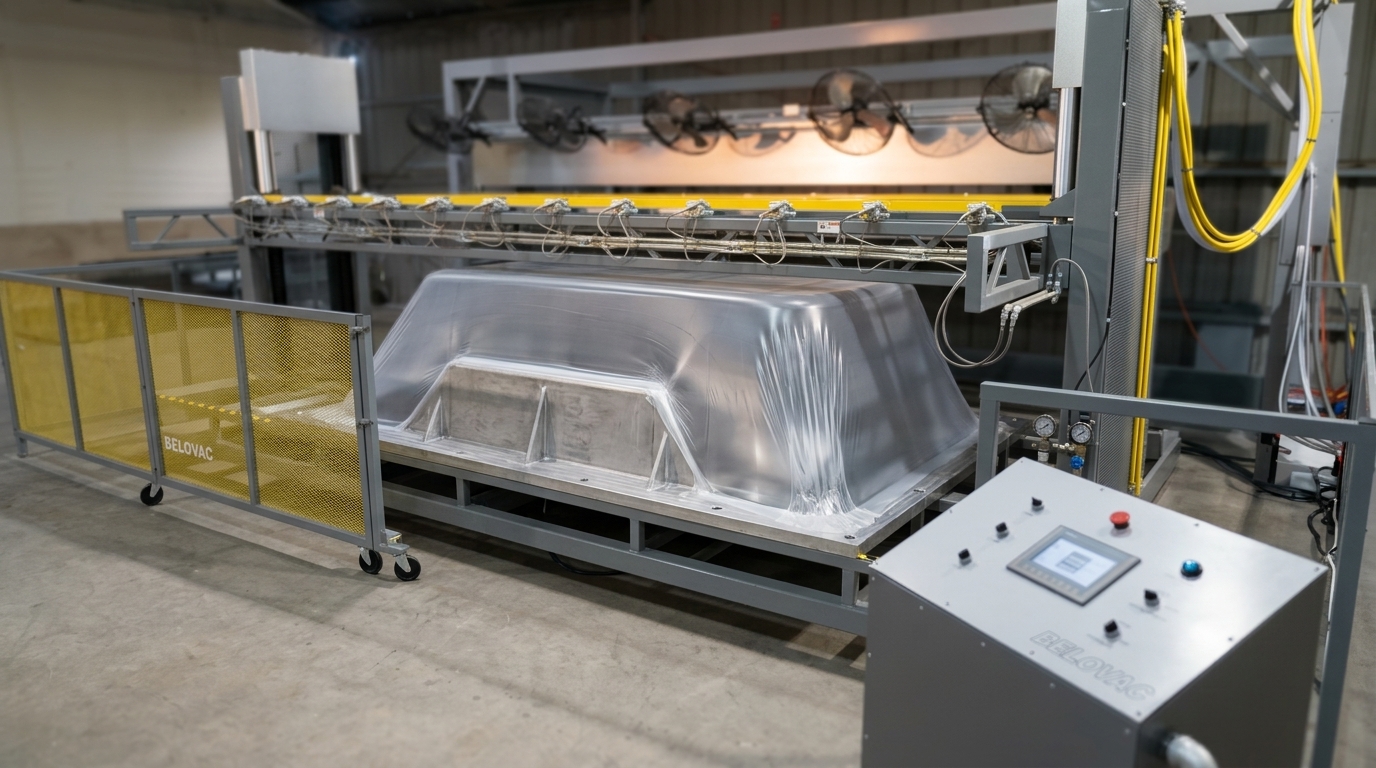
Sheet material doesn’t stretch for free. Every inch of draw depth pulls material in from a wider radius around the part, and on an oversized part that consumption adds up fast enough to change the sheet size a job actually requires, not just the wall thickness of the finished piece.
Why Draw Depth Eats Into Sheet Size, Not Just Thickness
A shallow part draws material almost straight down, so the flat sheet blank only needs to be marginally larger than the part footprint. A deeper draw pulls material from further out along the sheet’s surface to fill that depth, which means the usable blank has to start larger before forming even begins. On a small part this difference is minor. On an oversized part, where the draw radius scales with the part’s overall size, the extra sheet consumed by depth can turn a job that looked like a comfortable fit on the platen into one that runs right up against the sheet size limit.
This is separate from thinning. Even when a machine’s vacuum and plug-assist hold wall thickness within spec, the raw amount of material physically drawn into the depth still has to come from somewhere on the sheet, and that pull reduces how much usable flat area remains around the part for clamp margin and trim.
Where This Gets Missed in Sheet Sizing
Sheet size is often quoted against the part’s flat footprint alone, without accounting for how much additional material the draw depth consumes from around that footprint. On an oversized part already sized close to a machine’s platen limit, that oversight is what turns a planned single-sheet part into one that comes up short on material at the edges, right where clamp margin and trim allowance are needed most. Our large format vacuum forming machines are sized with enough sheet and platen capacity to absorb that draw consumption on oversized parts, rather than leaving a job with no margin once depth is factored in.
What to Calculate Before Sizing Sheet Stock
Getting sheet size right on a deep, oversized part means accounting for more than the part’s flat dimensions.
| What to calculate | Why it affects sheet consumption |
|---|---|
| Draw depth relative to part footprint | Deeper draws pull material from a wider radius, increasing the blank size needed beyond the flat footprint |
| Material stretch ratio for the sheet gauge | Determines how far the sheet can be drawn before thinning exceeds spec, which limits how much depth a given blank size supports |
| Clamp frame margin | Material consumed by draw depth reduces what’s left for clamp margin around the part perimeter |
| Trim allowance | Deeper draws often leave less usable edge material for trim, which can undersize the finished part if not planned for |
| Platen size versus blank size | The blank required for a deep draw can exceed platen capacity even when the finished part footprint fits comfortably |
Shops that size sheet stock off the part footprint alone tend to find the shortfall mid-run, when a deep draw on an oversized part leaves too little material at the edges to clamp or trim properly.
Sizing Sheet Stock to the Draw, Not Just the Part
Every shop planning an oversized, deep-draw part is really asking whether the sheet blank accounts for what the draw depth will consume, or whether the plan is based on the part’s flat footprint alone. That’s a calculation worth running before sheet is ordered, not after a run comes up short at the edges. Belovac has built thermoforming equipment in Banning, California since 1984, and financing through Univest Capital is available for shops weighing a large-format purchase against the ongoing cost of scrap from undersized sheet planning.
Request a quote and we’ll help you calculate the sheet size your deep-draw, oversized part actually requires before you commit to equipment.