
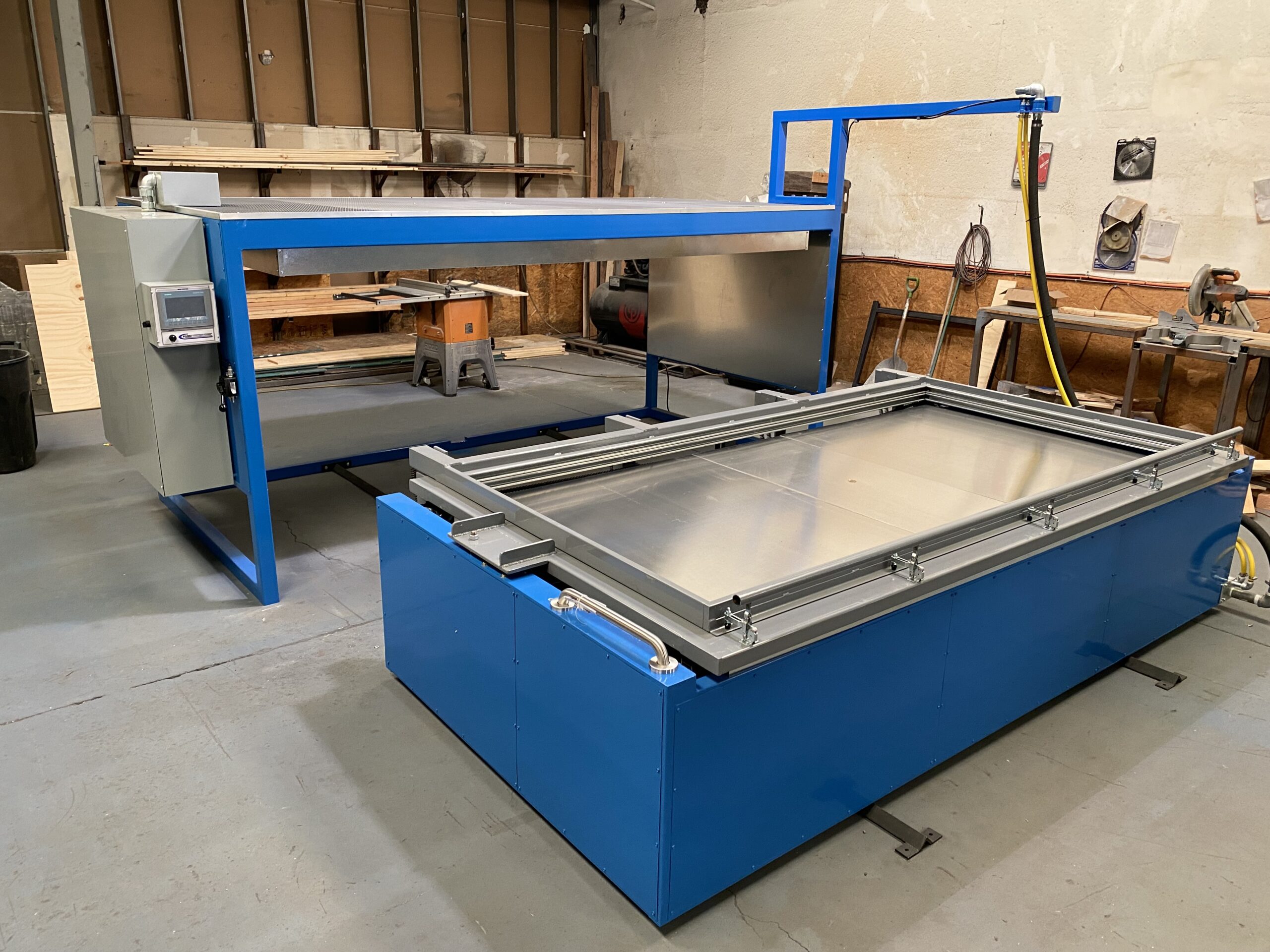
Manufacturers working with plastic forming often must choose between vacuum forming and pressure forming for an individual project. Both are widely used thermoforming techniques, capable of producing high-quality components, but they differ in cost, tooling, detail quality, and production speed. Understanding these differences is critical to selecting the most suitable method for your specific application and production needs.
How Vacuum Forming Works
Vacuum forming is a thermoforming process where a plastic sheet is heated until soft, then pulled tightly over a mold using vacuum suction. This draws the sheet into the mold cavity and allows it to conform to the shape of the tooling. Once cooled, the formed part is trimmed and finished as needed.
It’s a relatively simple and cost-effective method, particularly suitable for prototypes, short production runs, or large parts that don’t require high detail. The process can accommodate a wide range of thermoplastics, including ABS, polystyrene, polycarbonate, PETG, and acrylic.
Common Features of Vacuum Forming
- Lower tooling costs due to single-sided molds.
- Ideal for larger components with moderate detail.
- Faster turnaround for short runs.
- Compatible with thin to thick gauge plastic sheets.
What Is Pressure Forming?
Pressure forming is a more advanced version of thermoforming. Like vacuum forming, it uses heat and molds to shape plastic sheets. However, pressure forming applies positive air pressure (typically up to 100 psi) on the opposite side of the sheet, in addition to vacuum suction. This combination enables the plastic to achieve sharper details and more intricate features.
The process bridges the gap between vacuum forming and injection molding by delivering a higher level of detail without the high cost and lead time of metal injection molds.
Advantages of Pressure Forming
- High-precision surface textures and fine detail.
- Greater control over wall thickness and consistency.
- Suited for enclosures, bezels, and cosmetic-facing parts.
- Tight tolerance forming with crisp edges.
Key Differences Between Vacuum Forming and Pressure Forming
While both processes fall under the umbrella of thermoforming, several important distinctions affect which forming technique is best for your application.
| Feature | Vacuum Forming | Pressure Forming |
|---|---|---|
| Tooling Cost | Lower | Higher |
| Production Detail | Moderate | High |
| Cycle Time | Shorter | Slightly Longer |
| Surface Finish | Smooth, simple | Textured, sharp features |
| Part Complexity | Low to medium | Medium to high |
| Cost Per Unit | Lower | Higher |
Factors That Influence the Best Forming Technique
Choosing between vacuum and pressure forming depends on several factors, including part design, budget, production scale, and desired appearance. Below are practical considerations when determining the most efficient forming process:
Geometry and Design Features
If your part requires deep draws, sharp corners, logos, or detailed surface textures, pressure forming is often the better choice. Vacuum forming is well suited for simpler shapes or large components without tight radius needs.
Production Volume
Vacuum forming is preferred for small to medium runs due to lower tooling investment. Pressure forming becomes more cost-effective for higher volumes where cosmetic quality and design complexity matter more.
Application Requirements
Parts used as covers, trays, signage, or internal components can often be vacuum formed. Front-facing panels, medical housings, or any part requiring a finished look usually benefit from pressure forming precision.
Material Thickness
Both methods support a variety of plastic sheet thicknesses, but pressure forming tends to perform better with thicker sheets, where pressure helps distribute material more evenly across complex molds.
Common Applications of Each Forming Technique
Both vacuum forming and pressure forming are widely used in industrial manufacturing, but their practical use varies depending on part complexity, end-use, and finish requirements. Understanding where each technique fits best can help guide your selection based on performance and production goals.
Vacuum Forming Applications
Vacuum forming is ideal for producing larger parts with moderate detail and lower tooling costs. It’s frequently chosen for projects that prioritize speed, flexibility, and cost-efficiency in medium to low-volume runs. Examples include:
- Packaging trays and clamshells
- Hot tub shells and spa liners
- Signage backings and acrylic panels
- Large-format automotive or marine parts
- Prototyping and short-run plastic components
Pressure Forming Applications
Pressure forming is best suited for components that require high detail, sharp definition, and a premium finish. It’s the preferred method for parts that are visible to end-users or must meet strict cosmetic or functional standards.
- Medical device covers
- Industrial control panel enclosures
- Retail display housings
- Kiosk bezels and user-facing electronics
- Precision decorative trims
Materials Used in Thermoforming
Both vacuum and pressure forming can utilize a wide range of thermoplastics. Material selection should be based on thermal resistance, mechanical strength, optical clarity, and regulatory compliance.
Popular materials include:
- ABS: Durable and impact-resistant.
- Polystyrene (HIPS): Lightweight and inexpensive.
- PETG: Clear and food-safe.
- Polycarbonate: High strength and heat tolerance.
- Acrylic: Rigid with excellent clarity.
Choosing the Right Equipment Partner
While forming technique selection is important, the machinery behind it plays an equally critical role in quality and efficiency. Businesses seeking performance, reliability, and scalability in thermoforming benefit from partnering with experienced equipment providers.
Forming machines must offer consistent heat distribution, accurate temperature control, efficient vacuum/pressure systems, and the flexibility to handle a variety of materials and sheet sizes. Whether automated or manual, the right system should match your production pace and product goals.
Partnering with Belovac for Reliable Thermoforming Solutions
Belovac has been a leader in thermoforming technology for over 30 years, manufacturing vacuum forming machines and drying ovens that deliver consistent, high-quality results. Whether you’re developing a new product or expanding your production capacity, Belovac provides solutions tailored to your operation.
Highlights of Belovac equipment include:
- BV C-Class machines for budget-conscious, short-run production.
- BV E-Class systems with dual ovens for heavy-gauge material forming.
- BV A-Class fully automated machines for high-volume output.
- Large-format machines for spas, skylights, RV panels, and more.
- Custom-built options for unique sheet sizes and forming requirements.
All Belovac machines are made in the USA and engineered for long-term performance, thermal efficiency, and reliable forming under demanding industrial use.
Looking for expert guidance and durable forming equipment? Contact Belovac today to speak with our engineers and get a custom quote for your project.