
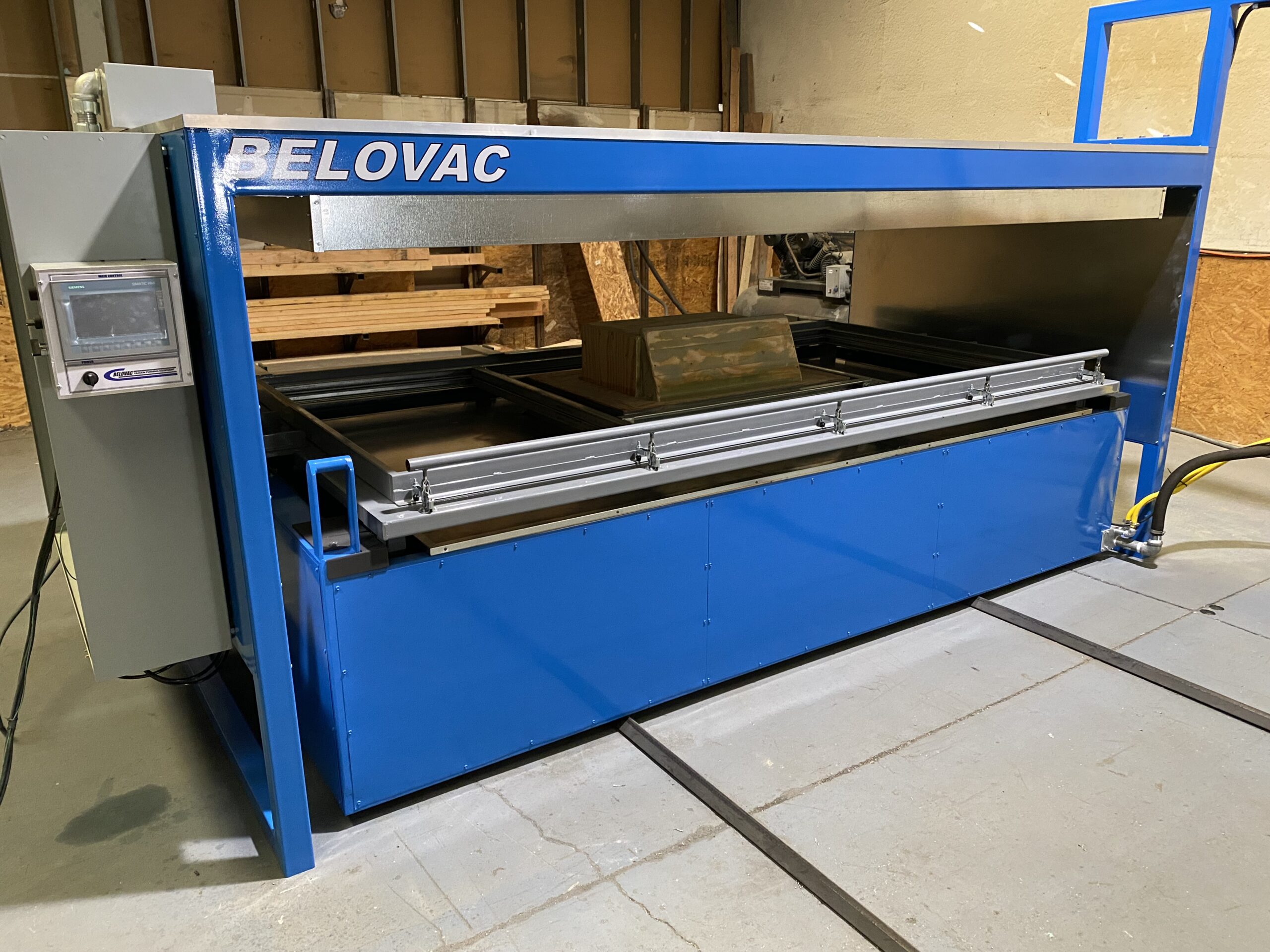
Positive pressure thermoforming is a key advancement within the plastic manufacturing sector, particularly for businesses that require high-precision results, tight tolerances, and faster cycle times. As thermoforming techniques evolve, the integration of positive pressure into the forming process has shown substantial benefits over traditional vacuum-only systems. Manufacturers across the automotive, packaging, medical, and appliance industries are increasingly shifting toward this method to meet modern production demands with consistent output and improved quality control.
What Defines a Positive Pressure Thermoforming Machine
A positive pressure thermoforming machine is a type of pressure forming system that shapes heated plastic sheets by applying compressed air to push the material into a mold. Unlike vacuum forming, which relies on suction alone, positive pressure forming enhances mold conformity by combining vacuum from below with air pressure from above. This dual-action approach creates more detailed, sharper, and higher-precision parts. It is particularly effective for deep draws, vertical sidewalls, or features requiring textured or fine detailing.
A helpful diagram of the thermoforming pressure process demonstrates how air and vacuum work together to shape materials with greater accuracy and structural consistency.
Core components typically include:
- Heated platens or ovens for thermal softening of plastic sheets.
- A sealed chamber to create a pressurized air flow.
- Mold bases for male or female form tooling.
- Vacuum system to assist in material adherence.
- An air compressor or tank for introducing positive pressure.
Key Advantages Over Vacuum Forming
In applications where precision, consistency, and surface detail are critical, positive pressure thermoforming machines offer several operational improvements compared to traditional vacuum forming equipment. Here are the main benefits manufacturers gain from upgrading to pressure-assisted forming systems:
| Feature | Vacuum Forming | Positive Pressure Forming |
| Forming Accuracy | Standard tolerance | High precision with sharp edges |
| Cycle Time | Moderate | Faster with controlled forming |
| Detail Reproduction | Limited | Excellent for logos, textures, and fine details |
| Material Stretch | More thinning on deep draws | Reduced thinning due to controlled pressure |
| Consistency | Variable due to air gaps | Uniform part thickness and dimensions |
Applications and Industry Use Cases
Positive pressure thermoforming machines are employed across industries where component uniformity, aesthetics, or dimensional accuracy are non-negotiable. These machines are especially suited for:
- Medical Equipment: Housing units, trays, or enclosures with sterile-quality surface finish.
- Consumer Electronics: Device covers, panels, or inserts with molded icons or textures.
- Automotive Components: Interior trims, dashboard panels, and lighting bezels with detailed features.
- Appliances: Control panels, faceplates, and enclosures with precise openings.
- Retail Packaging: Clamshells and blister packs with logos or raised letters.
Due to its ability to form thin or thick gauge materials while maintaining visual and structural integrity, pressure forming is often a preferred alternative to injection molding for small- to mid-volume production runs.
How the Positive Pressure Process Works
The forming cycle in a positive pressure thermoforming machine involves synchronized actions between heating, vacuum, and air pressure systems. Here is a simplified breakdown of the typical process:
- Loading: A plastic sheet is placed into the forming station.
- Heating: The sheet is softened using radiant or convection heating units until it reaches forming temperature.
- Clamping: The heated sheet is sealed inside the forming area to prevent air leaks.
- Vacuum Activation: Vacuum pulls the sheet toward the mold, initiating surface contact.
- Positive Pressure Boost: Compressed air is injected from above, forcing the plastic tightly into the mold contours.
- Cooling: The plastic is cooled while under pressure to retain its shape.
- Release: The mold opens, and the finished part is ejected or removed.
The combination of air and vacuum creates a uniform distribution of force, especially useful for geometries with undercuts or sharp transitions. This ensures high repeatability and dimensional control over the final part.
Material Compatibility and Limitations
Positive pressure thermoforming machines can handle a wide variety of thermoplastics, both thin and thick gauge. Common materials include:
- ABS (Acrylonitrile Butadiene Styrene)
- HIPS (High Impact Polystyrene)
- PC (Polycarbonate)
- PETG (Polyethylene Terephthalate Glycol)
- PMMA (Acrylic)
- HDPE (High-Density Polyethylene)
Material selection depends on the desired characteristics such as impact resistance, clarity, UV stability, or flame retardancy. While pressure forming provides enhanced detail, there are still depth-to-diameter ratios and draw limitations similar to other thermoforming processes. Proper mold design and sheet thickness must be considered to avoid thinning or distortion.
Efficiency and Cost Advantages in Manufacturing
Switching to positive pressure thermoforming helps manufacturers reduce part defects, improve speed, and lower post-processing requirements. Operational advantages include:
- Lower Tooling Costs: Mold fabrication is less expensive than injection molds, especially for prototypes and small runs.
- Faster Turnaround: Shorter setup and forming cycles enable quicker production.
- Minimal Trimming: Better form accuracy reduces material waste and finishing steps.
- Reduced Scrap Rates: Uniform sheet stretching lowers the chance of warping or rejected parts.
- Scalable Output: Can support both short-run and high-volume production with ease.
For businesses aiming to balance quality and cost, positive pressure systems offer the flexibility to run a wide range of product designs without the capital investment required for high-pressure injection systems.
Why Manufacturers Trust Belovac for Positive Pressure Thermoforming Solutions
Choosing the right positive pressure thermoforming machine depends on factors such as sheet size, material type, cycle time requirements, and desired automation. A specialized equipment partner helps ensure your investment delivers measurable results across efficiency, precision, and scalability.
Belovac has earned the trust of manufacturers for over 30 years by delivering custom-built forming solutions that adapt to a wide variety of production needs. Here’s why industry leaders partner with Belovac:
- Made in the USA: All machines are manufactured domestically with strict quality controls and durable components.
- Customizable Equipment: Systems are engineered to fit exact material specs, mold sizes, and production layouts.
- Full Product Range: From entry-level machines to fully automated roll-fed thermoformers.
- Large Format Capabilities: Ideal for spa liners, RV parts, skylights, signs, and more.
- Integrated Drying Ovens: Improve sheet condition before forming to reduce blemishes and increase consistency.
- Advanced Controls: PLC interfaces for easy operation, process monitoring, and thermal zone management.
- Industry Expertise: Proven results across automotive, signage, marine, packaging, and consumer appliance sectors.
Enhance your production process with the reliability, flexibility, and precision that only a positive pressure thermoforming machine from Belovac can offer. Contact us today to discuss your needs and request a customized quote.