
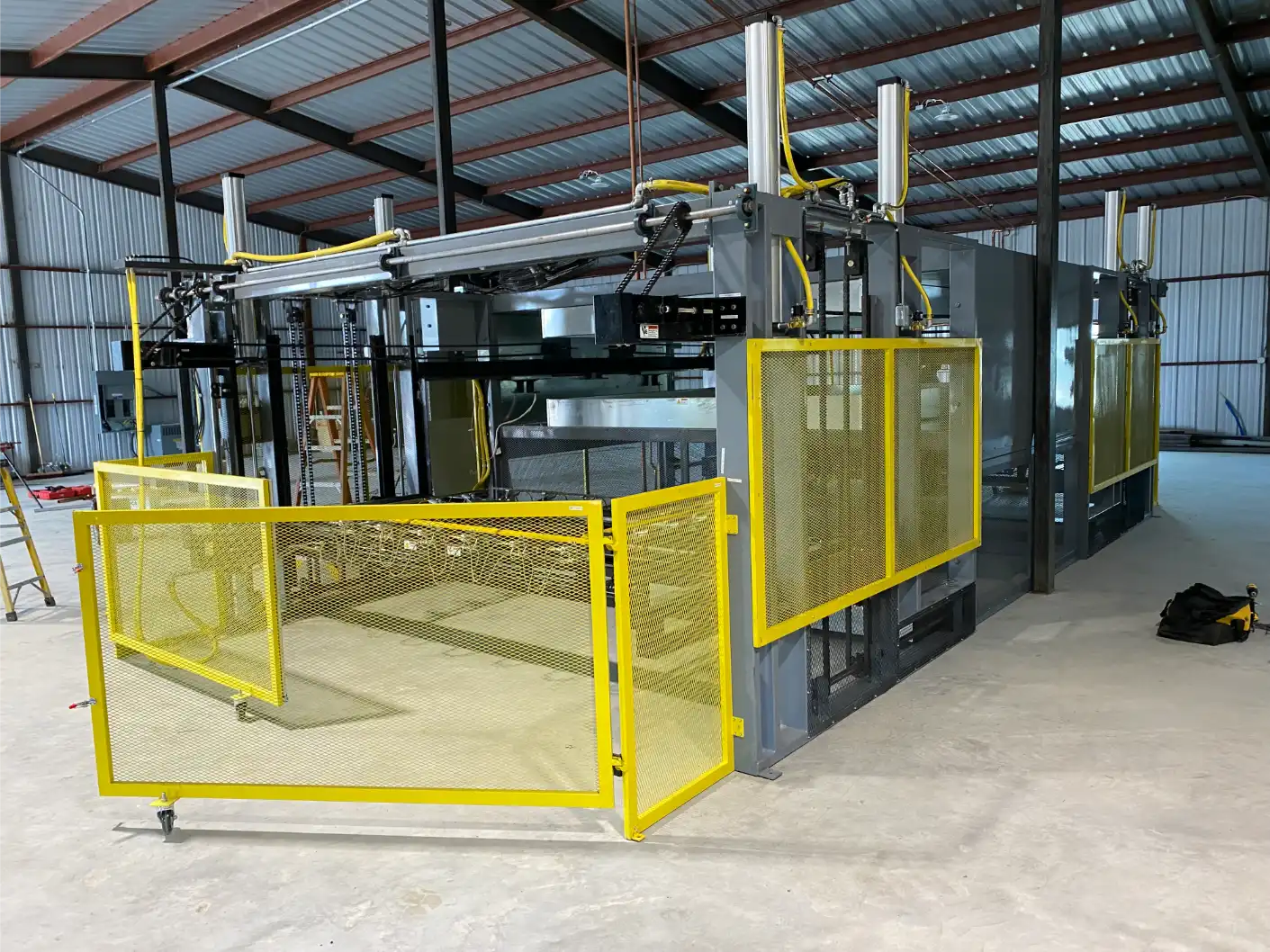
Manufacturing industries face increasing pressure to minimize waste while maintaining high-quality output. Large-format vacuum forming, a versatile and efficient process, has emerged as a key solution for businesses aiming to streamline production and align with sustainable practices. By shaping heated plastic sheets over molds using vacuum pressure, this technology produces precise, durable components with minimal material waste. Its ability to handle large-scale parts and a variety of materials makes it ideal for industries such as automotive, aerospace, packaging, and signage. Advanced innovations in vacuum forming technology further enhance its capacity to reduce production waste, lower energy consumption, and support eco-friendly manufacturing goals.
Understanding Large Format Vacuum Forming
Large-format vacuum forming involves heating large thermoplastic sheets until pliable, then using vacuum pressure to mold them over custom-designed molds. This process is well-suited for creating oversized components, such as automotive panels, spa shells, and signage displays. Unlike traditional manufacturing methods, vacuum forming requires simpler tooling, which reduces setup costs and enables rapid production. The technology supports a range of materials, including ABS, polystyrene, and PET, allowing manufacturers to select options that balance durability, cost, and sustainability. By optimizing material usage and minimizing excess, large-format vacuum forming contributes significantly to waste reduction in production environments. Belovac’s large-format vacuum forming machines deliver the precision and scale needed for industrial waste reduction goals.
Waste Reduction Through Precision Engineering
One of the primary advantages of large-format vacuum forming is its precision in material usage. Advanced machines employ PLC (Programmable Logic Controller) systems to control heating and vacuum processes, ensuring consistent results with minimal overruns. These systems allow for precise temperature control, preventing overheating that could degrade materials and generate waste. Additionally, modern mold designs are optimized to reduce excess plastic around the edges, known as trim waste. By using computer-aided design (CAD) and advanced cutting techniques, manufacturers can further minimize offcuts, ensuring that nearly all material is utilized in the final product.
Key strategies for waste reduction include:
- Optimized mold designs to reduce trim waste
- Precision heating to avoid material degradation
- Automated systems for consistent material application
Sustainable Manufacturing with Eco-Friendly Materials
Sustainability in vacuum forming extends beyond process efficiency to material selection. The adoption of recyclable and bioplastic materials has transformed the industry’s environmental impact. Materials like polylactic acid (PLA) and recycled PET are increasingly used due to their lower environmental footprint and compatibility with thermoforming processes. These materials, derived from renewable sources or recycled plastics, reduce reliance on petroleum-based products and support a circular economy. By integrating closed-loop recycling systems, manufacturers can reprocess trim waste and offcuts into new sheets, further reducing production waste and raw material costs.
Energy-efficient heating systems also play a role in sustainable manufacturing. Infrared and induction heating technologies, for example, provide precise temperature control, reducing energy consumption compared to traditional methods. These advancements align with global sustainability goals, enabling businesses to meet regulatory requirements and appeal to environmentally conscious customers.
Automation and Efficiency in Production
Automation is a cornerstone of modern large-format vacuum forming, driving both efficiency and waste reduction. Fully automated systems, equipped with advanced sensors and real-time monitoring, optimize every stage of the process. Smart sensors detect variations in material thickness or temperature, allowing immediate adjustments to prevent defects and waste. Automated sheet-fed and roll-fed systems streamline production by reducing manual handling, which minimizes errors and material loss. These technologies also enable faster cycle times, increasing throughput while maintaining quality, which is particularly beneficial for high-volume industries like packaging and automotive.
A notable example is the integration of Industry 4.0 technologies, such as IoT and data analytics. These tools provide insights into energy usage and material efficiency, enabling manufacturers to identify and address inefficiencies. Predictive maintenance algorithms further reduce downtime and waste by anticipating equipment issues before they disrupt production.
Applications Across Industries
Large-format vacuum forming serves a wide range of industries, each benefiting from its waste-reducing capabilities. In the automotive sector, it is used to produce lightweight, durable components like interior panels and exterior parts, which improve fuel efficiency while minimizing material use. The packaging industry leverages vacuum forming for custom trays and containers, designed to use only the necessary amount of plastic. Similarly, signage and spa manufacturing benefit from the ability to create large, complex shapes with minimal waste, ensuring cost-effectiveness and sustainability.
| Industry | Application | Waste Reduction Benefit |
| Automotive | Interior panels, exterior components | Lightweight parts, minimal trim waste |
| Packaging | Trays, containers | Optimized material usage, recyclable materials |
| Signage | Large displays, backings | Precision forming, reduced offcuts |
Overcoming Challenges in Waste Reduction
While large-format vacuum forming offers significant waste reduction benefits, challenges remain. One key issue is the variability in material recyclability. Some plastics, particularly those with additives, are harder to recycle, requiring advanced sorting and processing systems. Additionally, the initial investment in automated equipment and sustainable materials can be substantial, posing a barrier for smaller manufacturers. However, these costs are often offset by long-term savings in material and energy expenses. Ongoing research into biodegradable plastics and closed-loop recycling systems is addressing these challenges, paving the way for more sustainable vacuum forming practices.
Future Trends in Sustainable Vacuum Forming
The future of large-format vacuum forming lies in continued innovation and sustainability. Emerging trends include the development of advanced bioplastics with improved performance characteristics, such as lower melting points and enhanced recyclability. Closed-loop recycling systems are expected to become more widespread, allowing manufacturers to reuse waste materials on-site. Additionally, advancements in energy-efficient heating and cooling technologies will further reduce the environmental impact of vacuum forming. As regulatory pressures and consumer demand for sustainable products grow, businesses that invest in these technologies will gain a competitive edge in the market.
Reviewing Equipment for Large-Scale Production
Manufacturers researching equipment options for oversized, low-waste production runs can review Belovac’s full lineup of large format vacuum forming machines, covering sheet sizes and automation levels suited to the industries discussed above.
Why Belovac Leads Sustainable Manufacturing
Belovac leads the industry in large-format vacuum forming, delivering solutions that prioritize waste reduction and sustainable production. With over 30 years of experience, their machines are engineered to optimize material use and energy efficiency while maintaining high-quality output. Designed for industries such as automotive, packaging, and signage, Belovac’s equipment offers manufacturers the tools to achieve cost-effective, eco-friendly production.
The following features set Belovac apart in driving sustainable manufacturing:
- Advanced PLC Controls: Precision automation ensures consistent forming with minimal material waste.
- Energy-Efficient Heating: Dual heating systems reduce energy consumption, lowering operational costs and environmental impact.
- Customizable Designs: Tailored solutions meet specific industry needs, from small prototypes to large-scale production.
- Versatile Material Handling: Compatibility with recyclable and bioplastic materials supports sustainable practices.
- American-Made Reliability: Durable, high-performance machines ensure long-term efficiency and reduced downtime.
Manufacturers seeking to reduce production waste and embrace sustainable vacuum forming can rely on Belovac’s innovative technology. Contact us today to explore how their advanced equipment can streamline your production process and request a customized quote for your business needs.