
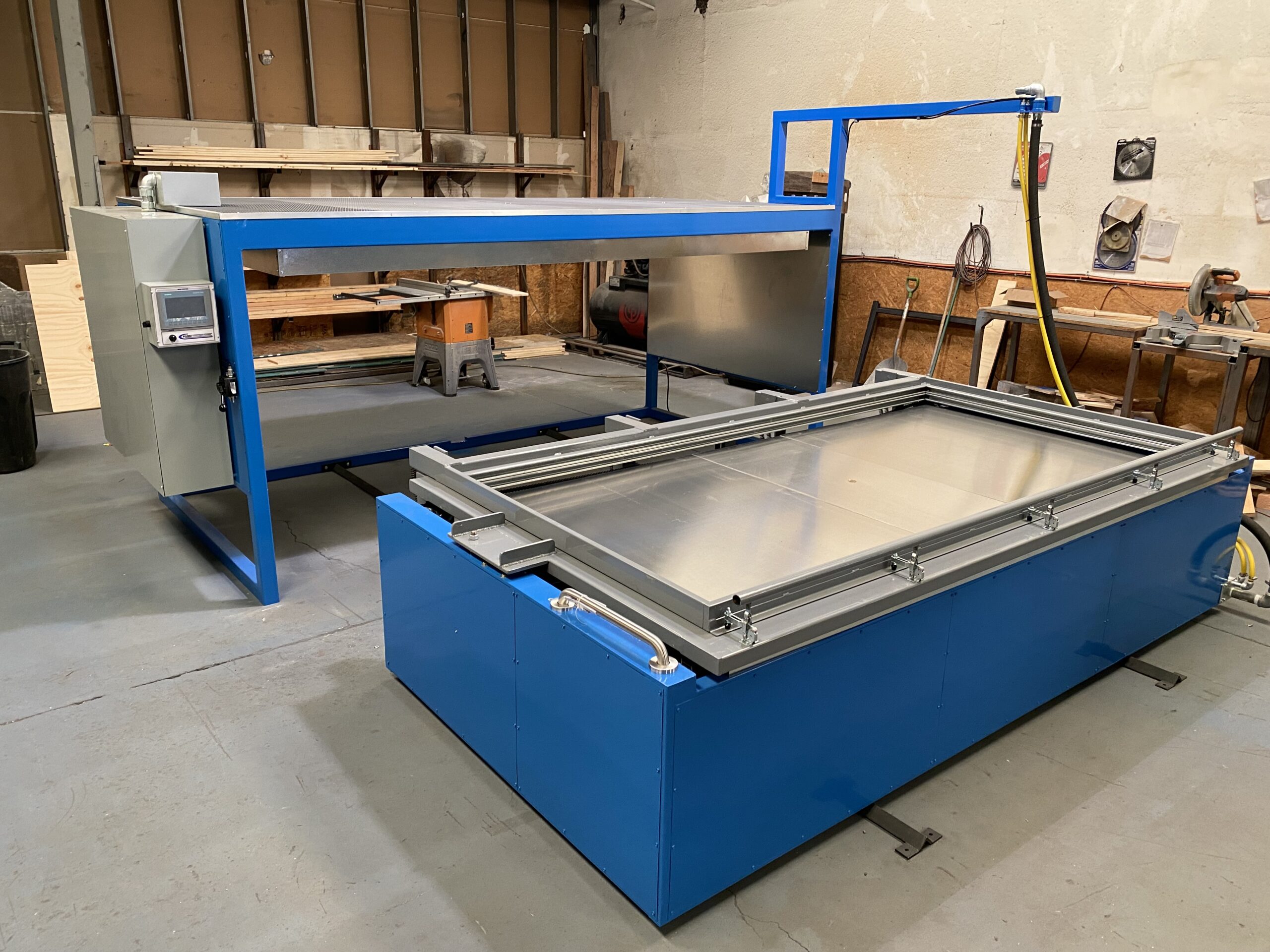
Two thermoforming processes shape the majority of plastic parts produced across manufacturing industries: pressure forming and vacuum forming. Both begin with a heated thermoplastic sheet and a mold, but the method by which force is applied to the plastic determines part detail, tooling cost, compatible materials, and the range of achievable shapes.
Choosing between these two methods is not simply a matter of preference. It requires a close look at production requirements, surface quality expectations, design complexity, and budget. Manufacturers across automotive, medical, packaging, and consumer goods sectors rely on both processes, often selecting one over the other based on a combination of practical and economic factors that are worth examining closely.
What Separates These Two Thermoforming Methods
Thermoforming is a broad manufacturing category that covers any plastic-forming process using heat and mechanical force to shape thermoplastic sheet material into three-dimensional parts. Pressure forming and vacuum forming both fall under this category, and they share nearly identical first steps. A thermoplastic sheet is clamped in a frame, heated to forming temperature, and brought into contact with a mold. The separation between the two methods occurs at the moment force is applied to push or pull the heated plastic against the mold surface.
In vacuum forming, air is evacuated from the space between the mold and the plastic sheet. The resulting pressure differential draws the material tightly around the mold using suction alone. In pressure forming, compressed air is directed above the plastic sheet, physically pushing it against the mold with significantly greater force. This difference in force application has a cascading effect on part quality, tooling design, cycle time, and cost, making the two processes well-suited to distinctly different applications despite their procedural similarities. Manufacturers evaluating thermoforming terminology will find that these distinctions are foundational to selecting the right process.
How the Pressure Forming Process Actually Works
Pressure forming begins with a thermoplastic sheet loaded into the machine and heated from above until it reaches its forming temperature and becomes pliable. The mold is positioned beneath the softened sheet, and pressurized air is applied from above. Depending on the application, this air pressure typically ranges from 20 psi to over 100 psi, pushing the plastic firmly against every contour of the mold surface.
This high-pressure contact is what gives positive pressure thermoforming its most valuable characteristic in molding technology: the ability to replicate intricate mold details with exceptional accuracy. The compressed air forces the plastic into fine surface textures, sharp corners, embossed lettering, and complex geometric features. After forming, the part is cooled under pressure, which supports dimensional stability and tight tolerances. Pressure forming is widely applied in the production of automotive components, medical device enclosures, electronic housings, aerospace panels, and retail point-of-purchase displays, where surface appearance and part precision are non-negotiable.
How Vacuum Forming Creates Parts at Scale
Vacuum forming follows a simpler mechanical process. A thermoplastic sheet is heated, positioned over a mold, and a vacuum pump removes the air between the sheet and the mold surface. The resulting negative pressure pulls the plastic tightly against the mold. Once the material has cooled and solidified, the formed part is released and trimmed to specification. Molds can be either male, where plastic forms over the mold, or female, where plastic is drawn into the mold cavity, depending on where the detailed surface features are needed.
The reduced mechanical complexity of vacuum vs pressure forming translates directly into lower equipment costs, faster setup, and quicker cycle times. Because vacuum forming relies on atmospheric pressure differential, approximately 14.7 psi at sea level, it does not require the reinforced tooling or sealed pressure chambers that pressure forming demands. Industrial vacuum forming machines are well-suited to large production runs of parts with moderate geometric complexity, including packaging trays, food containers, automotive interior panels, spa and hot tub shells, medical device trays, signage backings, and refrigerator liners.
Comparing Detail, Tolerance, and Surface Quality
One of the most practical distinctions in the pressure forming vs vacuum forming comparison is the level of surface detail and dimensional accuracy each process can achieve. Pressure forming produces results that closely approach injection molding in terms of part precision and surface finish. Sharp angles, fine textures, undercuts, and complex geometries are all achievable because the high-pressure air forces the plastic into every feature of the mold. This makes pressure forming a frequent choice when parts will be highly visible or when strict tolerances are required for downstream assembly.
Vacuum forming, by contrast, produces parts with less precise edge definition and more rounded features, because the lower forming force cannot push the plastic into fine mold details with the same intensity. For many applications, this is not a limitation but an advantage. Parts requiring consistent wall thickness across large surface areas, smooth curved geometry, and even material distribution are well-served by vacuum forming. A detailed review of vacuum forming precision techniques shows that when appearance and tolerance requirements are moderate, the process delivers capable and cost-effective results without the added tooling investment that pressure forming demands.
Material Compatibility and Thickness Considerations
Both processes are compatible with a wide range of thermoplastics. Material selection is guided by the application’s specific demands, including impact resistance, UV stability, optical clarity, chemical resistance, and compliance with food contact material standards or medical device regulations. Commonly used thermoplastics in both processes include:
- ABS (Acrylonitrile Butadiene Styrene): high stiffness, strong impact resistance, and easy processing
- HIPS (High-Impact Polystyrene): dimensional stability, low cost, and suitability for food-grade applications
- PVC (Polyvinyl Chloride): chemical resistance, durability, and broad use in packaging
- PETG (Polyethylene Terephthalate Glycol): excellent clarity, chemical resistance, and suitability for food-safe parts
- Polycarbonate (PC): optical clarity, high toughness, and common use in medical and industrial enclosures
- Acrylic / PMMA (Polymethyl Methacrylate): UV resistance, optical quality, and good stiffness
- TPO (Thermoplastic Polyolefin): flexibility, UV stability, and common use in automotive exterior applications
A meaningful distinction between the two in terms of molding technology involves sheet thickness. Pressure forming is capable of processing thicker plastic gauges because the greater forming force compensates for the increased resistance of heavier material. Vacuum forming handles a broad range of gauges effectively and remains the preferred method for large-format parts, thin-to-medium gauge materials, and high-volume lightweight components. A closer review of heavy gauge vs thin gauge thermoforming provides useful guidance on matching material thickness to the right process for a given application.
Cost, Tooling, and Production Volume Trade-Offs
Cost is a significant factor when comparing vacuum vs pressure forming. The table below summarizes the primary trade-offs manufacturers should evaluate before committing to either process.
| Factor | Vacuum Forming | Pressure Forming |
| Tooling Cost | Lower; aluminum, wood, or resin molds are often viable. | Higher; reinforced molds are typically required to handle forming pressure. |
| Equipment Cost | Lower initial investment. | Higher due to the pressure chamber and sealing requirements. |
| Surface Detail | Moderate; best for rounded edges and smooth curves. | High; capable of sharp angles, fine textures, and embossed features. |
| Dimensional Tolerance | Well-suited for larger, less complex parts with standard tolerance requirements. | Tighter tolerances, approaching those of injection molding in some applications. |
| Material Thickness | Best for thin to medium gauge materials, typically up to about 6 mm. | Better suited for forming thicker gauge materials. |
| Cycle Time | Generally faster because of simpler setup and processing. | Slightly longer due to pressurized forming and cooling requirements. |
| Best Application Fit | High-volume production of large parts with moderate detail requirements. | Parts with complex geometry, stronger visual appeal, or tighter tolerance requirements. |
| Compared with Injection Molding Cost | Significantly lower tooling cost than injection molding. | Still much lower tooling cost than injection molding. |
For manufacturers producing complex parts in medium to large volumes where surface quality justifies the tooling expenditure, pressure forming delivers a favorable cost-per-part profile. A direct comparison of thermoforming vs injection molding further illustrates where each process sits on the cost and capability spectrum. Production teams choosing between these methods will also benefit from reviewing plastics standards maintained by ASTM International, which provide material and performance benchmarks relevant to both forming methods.
Why Belovac LLC Leads in Vacuum Forming Technology
Since 1984, Belovac LLC has built industrial vacuum forming machines for demanding production environments. Family-owned, U.S.-manufactured, and trusted for over 40 years, Belovac provides the equipment, expertise, and support manufacturers rely on.
Our machine lineup includes the following:
- BV C-Class Series: Flexible, configurable systems for a wide range of applications
- BV A-Class Roll-Fed and Sheet-Fed Systems: Automated solutions for high-volume production
- Large-Format Vacuum Forming Machines: Built for spa and hot tub shells, skylights, signage, automotive, and RV applications
Every machine is backed by direct access to Belovac design engineers who match equipment to your materials, part geometry, and production goals.
Ready to find the right machine for your operational needs? Contact us today to speak with an engineer.