
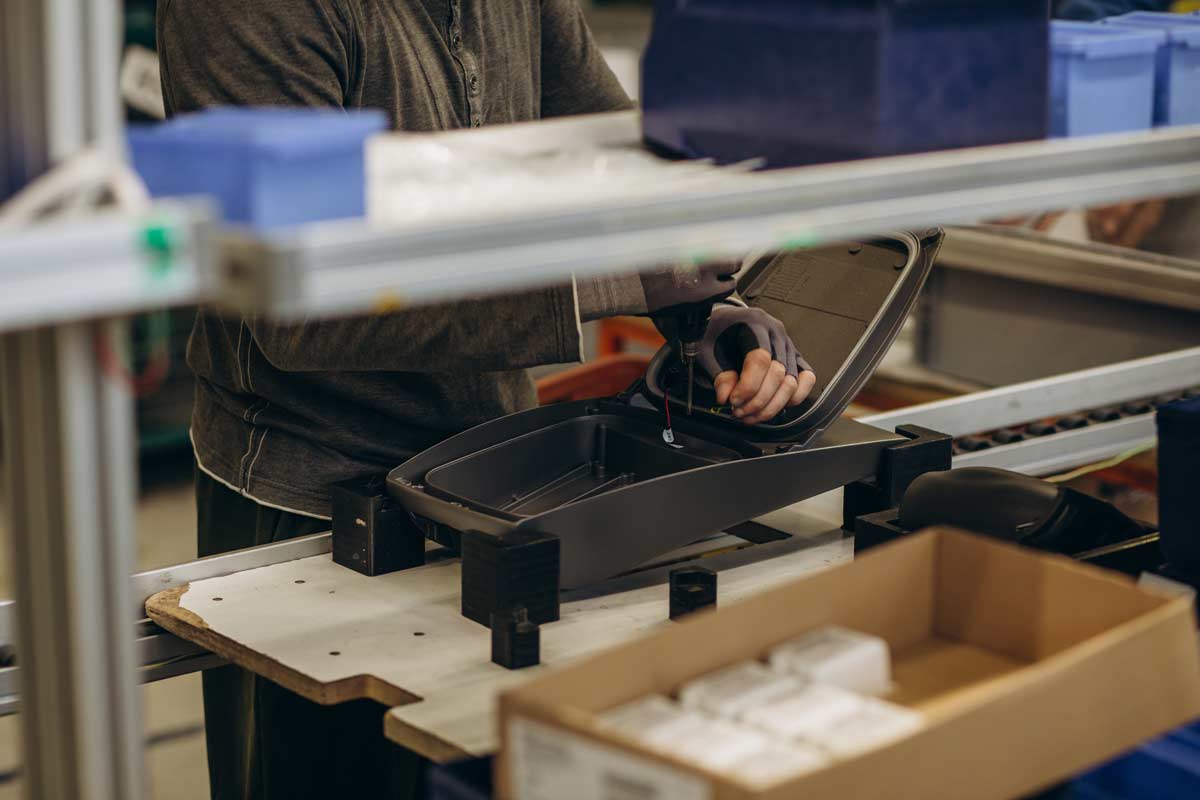
The manufacturing landscape continues to evolve at breakneck speed, driven by demands for greater efficiency, sustainability, and customization. At the heart of this transformation lies industrial vacuum forming—a versatile manufacturing process that has quietly revolutionized how products are designed, prototyped, and mass-produced across countless industries. From thermoform packaging solutions that protect our everyday goods to complex components that power modern aircraft, vacuum forming technology represents the perfect intersection of innovation, cost-effectiveness, and scalability.
The Evolution of Vacuum Forming in Modern Manufacturing
Industrial vacuum forming has transcended its humble beginnings as a simple plastic shaping technique to become a cornerstone of modern manufacturing. This process, which involves heating thermoplastic sheets until malleable and then forming them over molds using vacuum pressure, offers manufacturers unprecedented flexibility in creating everything from simple containers to highly complex, precision-engineered components.
The beauty of vacuum forming lies in its fundamental simplicity, yet this simplicity masks the sophisticated engineering and precise control required for optimal results. Modern industrial vacuum forming machines incorporate advanced heating systems, programmable logic controllers, and precision vacuum systems that enable manufacturers to achieve remarkable consistency and quality while maintaining the speed and cost-effectiveness that make the process so attractive.
What sets contemporary vacuum forming apart is its ability to bridge the gap between custom, one-off production and high-volume manufacturing. Unlike injection molding, which requires expensive tooling that can take weeks or months to produce, vacuum forming molds can often be created in days, making it ideal for rapid prototyping, short production runs, and applications where design changes are frequent.
Understanding the Technical Advantages
The technical sophistication of modern vacuum forming equipment has reached new heights, offering manufacturers capabilities that were unimaginable just a decade ago. Advanced zone heating systems allow for precise temperature control across different areas of the plastic sheet, ensuring uniform wall thickness distribution even in complex geometries. This level of control is particularly crucial when forming parts with deep draws or intricate details.
Temperature uniformity represents just one aspect of the technological advancement in vacuum forming. Modern machines feature sophisticated vacuum systems that can create differential pressure zones, allowing for controlled forming that minimizes stress concentrations and material thinning. This capability is essential when working with high-performance materials or when producing parts that must meet stringent quality standards.
The integration of programmable logic controllers (PLCs) and human-machine interfaces (HMIs) has transformed vacuum forming from a largely manual process to a highly automated, repeatable manufacturing method. These systems can store multiple forming programs, automatically adjust parameters based on material specifications, and even perform real-time quality monitoring to ensure consistent output.
Material handling automation has also significantly improved productivity and quality. Automated sheet loading systems reduce manual labor while ensuring consistent material positioning, while robotic part removal and stacking systems can operate continuously, maximizing throughput and minimizing the risk of damage to finished parts.
Industry Applications: Where Vacuum Forming Excels
The versatility of vacuum forming makes it indispensable across a remarkable range of industries, each with unique requirements that showcase different aspects of the technology’s capabilities.
In the aerospace sector, vacuum formed aerospace components must meet exacting standards for weight, strength, and dimensional accuracy. Interior panels, ducting components, and service equipment housings benefit from vacuum forming’s ability to create lightweight yet durable parts with complex geometries. The process allows aerospace manufacturers to reduce part count through integration, eliminating fasteners and joints that add weight and potential failure points.
The automotive industry leverages vacuum forming for both visible and hidden components. Vacuum formed automotive parts range from dashboard components and door panels to under-hood applications like air intake ducts and battery housings. The ability to incorporate texture, color, and even in-mold decorating makes vacuum forming particularly attractive for interior applications where aesthetics matter as much as functionality.
Aircraft seating represents a specialized application where vacuum formed aircraft seating parts must balance comfort, safety, and weight considerations. Seat backs, armrests, and tray tables require materials that can withstand rigorous safety testing while maintaining passenger comfort over thousands of hours of service. Vacuum forming allows seat manufacturers to create ergonomic contours that would be difficult or impossible to achieve through other manufacturing methods.
The construction industry has embraced vacuum forming for applications such as vacuum formed cement precast molds, which offer significant advantages over traditional wood or metal forming systems. These molds can be produced quickly, are lightweight for easy handling, and can be designed to create complex architectural details that enhance building aesthetics while maintaining structural integrity.
Healthcare applications showcase vacuum forming’s precision and cleanliness capabilities. Vacuum formed medical packaging equipment includes sterile trays, equipment housings, and protective covers that must meet stringent FDA requirements. The ability to create smooth, easy-to-clean surfaces with minimal crevices makes vacuum forming ideal for medical applications where contamination control is paramount.
The Economics of Vacuum Forming Investment
Understanding the economic advantages of vacuum forming requires looking beyond simple per-part costs to consider the total cost of ownership and the strategic benefits the technology provides. Initial tooling costs for vacuum forming are typically 80-90% lower than comparable injection molding tools, making it economically viable for shorter production runs that would be prohibitively expensive with other processes.
The speed of tool production represents another significant economic advantage. While injection molding tools can take 8-16 weeks to produce, vacuum forming tools can often be completed in 1-2 weeks, dramatically reducing time-to-market for new products. This rapid tooling capability becomes even more valuable in industries where product lifecycles are short or where design changes are frequent.
Material efficiency in vacuum forming has improved dramatically with modern equipment. Advanced trim-in-place systems can achieve material utilization rates exceeding 85%, while sheet nesting optimization software maximizes the number of parts per sheet. When combined with the ability to recycle most thermoplastic materials, vacuum forming offers compelling sustainability credentials that resonate with environmentally conscious manufacturers and consumers.
Labor efficiency represents another area where modern vacuum forming excels. Automated systems can operate with minimal supervision, while quick-change tooling systems minimize setup times between different parts. This efficiency translates to lower per-part labor costs and improved production scheduling flexibility.
Material Science and Innovation
The continuous development of new thermoplastic materials has expanded the capabilities and applications of vacuum forming significantly. High-performance materials like PEEK, PEI, and advanced ABS formulations offer properties that rival metals in many applications while maintaining the processability advantages of thermoplastics.
Barrier materials have revolutionized packaging applications, allowing vacuum formed containers to protect sensitive products from moisture, oxygen, and UV light. Multi-layer materials can combine different properties in a single sheet, such as a decorative outer layer, a structural core, and a barrier inner layer.
Sustainable materials represent a growing segment of the vacuum forming market. Bio-based plastics, recycled content materials, and fully compostable options allow manufacturers to meet environmental goals without sacrificing performance. The development of these materials has been driven partly by regulatory requirements but increasingly by consumer demand for sustainable products.
Conductive and EMI shielding materials enable vacuum forming to address electronic applications where electromagnetic interference must be controlled. These specialized materials can be formed into complex housings that provide both physical protection and electrical performance.
Quality Control and Process Optimization
Modern vacuum forming operations employ sophisticated quality control systems that ensure consistent part quality while minimizing waste. Non-contact measurement systems can verify part dimensions in real-time, automatically adjusting process parameters to maintain specifications. These systems can detect variations that would be impossible to identify through manual inspection.
Statistical process control (SPC) software tracks key process variables and part characteristics over time, identifying trends that might indicate equipment maintenance needs or process drift. This predictive approach to quality management helps prevent defects before they occur rather than simply detecting them after production.
Material tracking systems ensure that the correct materials are used for each application and can provide complete traceability for parts used in critical applications. This capability is particularly important in aerospace and medical applications where regulatory compliance requires detailed documentation of materials and processes.
Process optimization through design of experiments (DOE) methodologies allows manufacturers to identify optimal forming parameters for new materials or part geometries. This scientific approach to process development reduces development time while ensuring robust production parameters.
Future Trends and Emerging Technologies
The future of vacuum forming technology promises continued innovation across multiple fronts. Industry 4.0 concepts are being integrated into vacuum forming equipment, enabling predictive maintenance, remote monitoring, and artificial intelligence-assisted process optimization. These technologies will further reduce operating costs while improving reliability and quality.
Additive manufacturing is beginning to impact vacuum forming through rapid prototyping of forming tools and even production tools for short runs. 3D printed tools can be produced in hours rather than days, further accelerating product development cycles.
Smart materials that can change properties in response to temperature, moisture, or other stimuli are opening new application possibilities. Shape-memory polymers, for example, could enable packaging that responds to environmental conditions or mechanical components that adapt to changing loads.
Digital decoration technologies allow graphics and textures to be applied during the forming process, eliminating secondary operations while providing unlimited design possibilities. This capability is particularly valuable in consumer products where visual appeal drives purchasing decisions.
The Strategic Value of Thermoforming Investment
For manufacturers considering vacuum forming capabilities, the strategic value extends far beyond simple cost savings. The ability to rapidly prototype and iterate designs provides significant competitive advantages in markets where innovation speed determines success. Companies can test market response to new products without the massive investment required for injection molding tooling.
The flexibility to handle both small and large production volumes with the same equipment provides operational advantages that become more valuable as market demand becomes less predictable. Manufacturers can respond quickly to demand spikes without the long lead times associated with traditional tooling.
The benefits of thermoforming for packaging solutions are particularly compelling in today’s market environment. Shaping the future through advanced thermoforming involves not just technical capabilities but understanding how these capabilities translate into business advantages.
Conclusion: Investing in Manufacturing Excellence
Industrial vacuum forming represents more than just another manufacturing process—it embodies a philosophy of manufacturing that prioritizes flexibility, efficiency, and innovation. As markets become more dynamic and customer expectations continue to rise, the ability to quickly adapt products and production methods becomes increasingly valuable.
The decision to invest in vacuum forming technology should be viewed through the lens of long-term strategic advantage rather than simple cost comparison. The combination of low initial investment, rapid tooling, material efficiency, and design flexibility creates a manufacturing platform that can adapt and grow with changing business needs.
Whether the application involves high-volume packaging production, precision aerospace components, or innovative consumer products, vacuum forming technology offers the capabilities needed to compete effectively in today’s challenging manufacturing environment. The key lies in understanding how to leverage these capabilities strategically to create sustainable competitive advantages.
The future belongs to manufacturers who can combine technical excellence with operational flexibility, and industrial vacuum forming provides exactly this combination. By investing in advanced vacuum forming capabilities, manufacturers position themselves not just to meet today’s challenges but to capitalize on tomorrow’s opportunities. Belovac’s full lineup of industrial vacuum forming machines for sale covers every production scale—from entry-level manual sheet-fed systems to fully automated large-format thermoformers.