
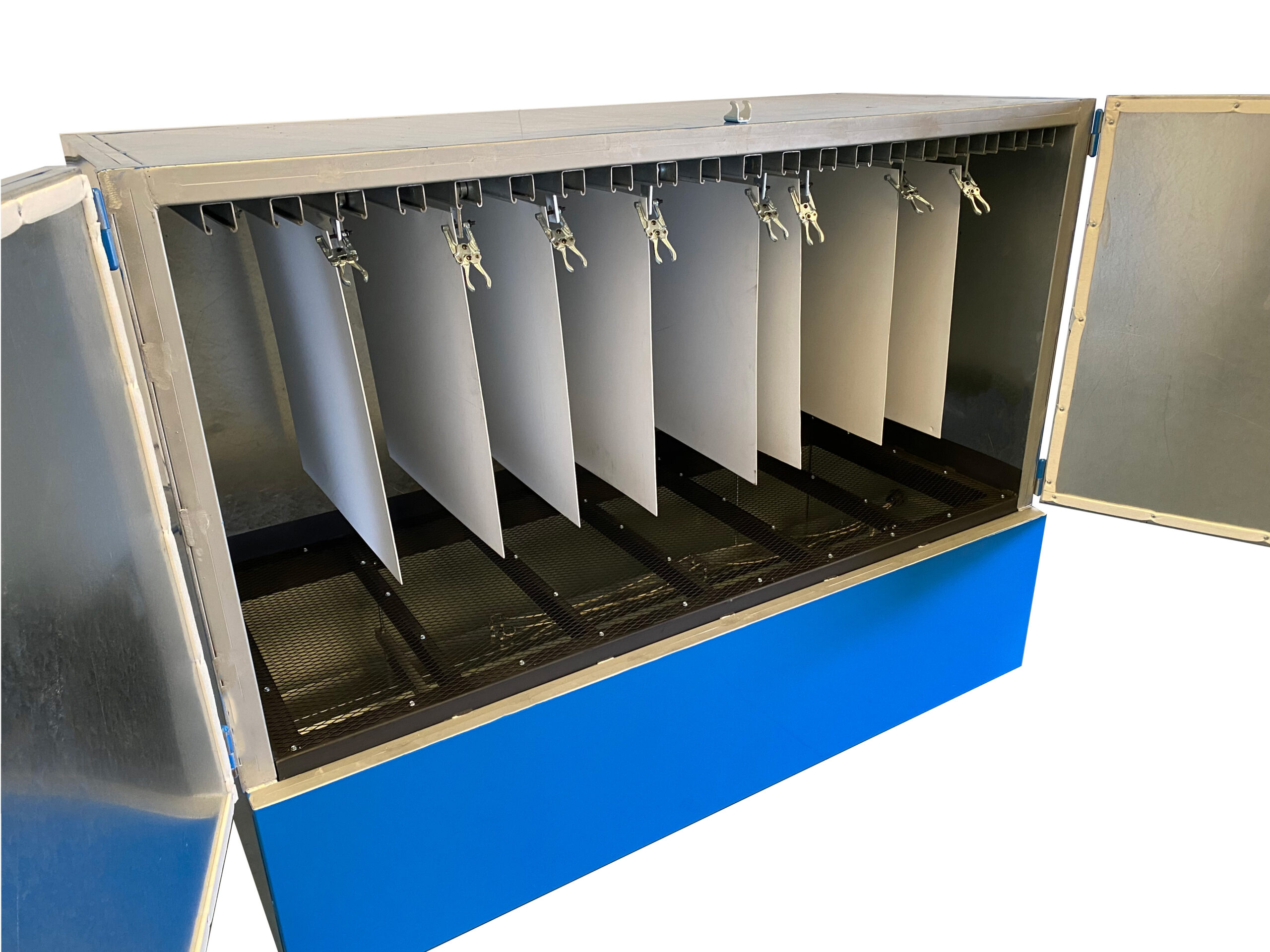
High-performance drying ovens are vital in preparing plastic sheets before thermoforming and vacuum forming. Consistent moisture removal prevents warping, surface blemishes, and process delays that can compromise quality. Two widely used approaches in this pre-forming stage are suspended plastic sheet drying and shelved drying racks. Each method offers unique strengths, and manufacturers evaluating ovens must consider efficiency, airflow, and workflow compatibility before choosing the best fit.
The Role of High-Performance Drying Ovens in Plastic Processing
In plastics manufacturing, moisture is a constant threat. Many polymers, such as ABS, PETG, PC, and acrylic, absorb humidity during storage and handling. If not properly dried, these hygroscopic properties lead to bubbling, hazy finishes, and inconsistent wall thickness during forming. High-performance drying ovens address these issues by maintaining controlled temperature ranges, engineered airflow, and precise dew point management. Modern ovens are designed with advanced sensors, recipe programming, and energy-conscious circulation systems to align with lean manufacturing demands.
Both suspended sheet drying and shelved racks rely on these oven fundamentals, but they differ significantly in how plastic sheets are positioned, how airflow interacts with surfaces, and how operators handle loading and unloading cycles.
How Suspended Plastic Sheet Drying Works
Suspended plastic sheet drying positions sheets vertically or at slight angles, hung from frames, rods, or tension systems inside the oven chamber. By eliminating direct contact with racks, air can flow freely around both sides of each sheet, resulting in uniform moisture removal. This method minimizes pressure points or indentations that can occur when sheets rest against solid surfaces. It also reduces the chance of sheets sticking or deforming under heat.
Industries working with thick gauge or sensitive sheet materials often prefer suspension because the airflow pattern reaches every surface consistently. The absence of shelf shadows allows better penetration of heat into corners and edges. However, suspended drying requires careful sheet handling and stable mounting systems, which can add setup time during changeovers.
How Shelved Drying Racks Work
Shelved drying racks are structured trays or grids stacked inside the oven chamber. Sheets rest flat on each shelf, supported across their surface area. This approach is practical in high-volume operations where quick loading and unloading are prioritized. Multiple sheets can be processed simultaneously, and operators can stage material batches with efficiency.
While shelves support predictable stacking, airflow can be partially obstructed where the sheet contacts the rack. This may create uneven drying if airflow is not carefully engineered. Advanced oven designs compensate with directed jets or variable-speed fans that maintain circulation between rack levels. Still, shelved drying introduces the possibility of pressure marks, making it less desirable for extremely sensitive surfaces.
Technical Comparison of Drying Efficiency and Consistency
The differences between suspended sheet drying and shelved racks become clear when examining airflow, labor demand, and process reliability. The following table outlines key factors that influence decision-making in high-performance drying ovens:
| Criteria | Suspended Plastic Sheet Drying | Shelved Drying Racks |
|---|---|---|
| Airflow coverage | Excellent airflow on both sides, minimal shadowing | Restricted where the sheet contacts the rack; requires engineered airflow |
| Surface protection | No rack contact; reduced risk of indentations | Potential marks at rack contact points |
| Batch capacity | Moderate; limited by suspension frame size | High; multiple sheets stacked simultaneously |
| Operator handling | More time required to mount sheets securely | Fast loading and unloading with batch racks |
| Energy efficiency | Efficient airflow but lower density per cycle | Higher throughput but more fan power to maintain circulation |
| Material suitability | Ideal for sensitive or thick-gauge plastics | Better suited for standard gauge and durable materials |
This comparison highlights that suspended drying excels when precision and surface protection are critical, while shelved racks benefit high-volume operations aiming for maximum throughput.
Energy Use, Maintenance, and Workflow Considerations
Energy consumption is one of the most significant contributors to overall manufacturing costs. Studies on energy consumption in manufacturing highlight how efficiency, intensity, and waste reduction directly affect profitability. High-performance drying ovens are no exception, with airflow patterns, load density, and maintenance routines shaping total power demand.
- Suspended plastic sheet drying often achieves efficient airflow since both surfaces are fully exposed. This can reduce fan energy per sheet, but fewer sheets can be processed per cycle.
- Shelved drying racks maximize capacity and throughput but require more circulation power to compensate for airflow resistance between stacked levels.
- Maintenance practices directly affect energy use. Clean racks and unobstructed airflow reduce fan strain, while worn suspension clips or frames may increase drying times if airflow is disrupted.
- Workflow design determines efficiency at scale. Batch production lines benefit from rack systems that load quickly, while custom thermoforming shops may gain more from suspension setups that prevent surface defects and reduce rework.
- Monitoring and measurement of energy intensity, such as kWh per pound of dried plastic, helps manufacturers identify whether racks or suspension delivers better cost efficiency in their environment.
Whether selecting suspended drying or shelved racks, energy performance depends on oven design, airflow engineering, and disciplined maintenance. By aligning method and workflow, manufacturers can reduce energy waste while keeping production consistent.
Industry Use Cases and Decision Factors
Different industries weigh these methods based on their product mix and quality expectations. Automotive and aerospace suppliers, working with high-spec plastics, often rely on suspended drying to maintain flawless finishes. Medical device and packaging producers may choose shelved racks to accommodate large daily volumes where surface markings are less visible. Signage, spa, and skylight manufacturers often implement hybrid oven setups capable of supporting both suspension frames and racks, allowing flexibility across product lines.
Decision factors include sheet thickness, material type, required surface aesthetics, cycle times, and available floor space. High-performance drying ovens are often engineered to customer specifications, ensuring that airflow, heating zones, and loading mechanisms match the manufacturer’s exact requirements.
Discover Precision with Belovac’s High-Performance Drying Ovens
With over three decades of experience, Belovac designs and builds vacuum forming machines and drying ovens engineered specifically for plastics processing. All systems are manufactured in the United States and configured to deliver consistency and reliability in demanding environments. Belovac’s products offer:
- Uniform temperature distribution that prevents moisture-related defects
- Engineered airflow reaching every surface for predictable results
- Energy-efficient controls that reduce operating costs
- Support for suspended plastic sheet drying and shelved drying racks
- Custom configurations tailored to industry-specific requirements
- Durable construction with recipe controls that simplify quality audits
Automotive, aerospace, medical, signage, and spa manufacturers trust Belovac to integrate drying ovens with thermoforming lines, improving product quality while lowering scrap rates. Our modular approach ensures every system aligns with production goals and long-term efficiency.
Partner with Belovac to advance plastics processing with precision-engineered drying ovens. Contact us today to discuss your application and request a custom quote.