
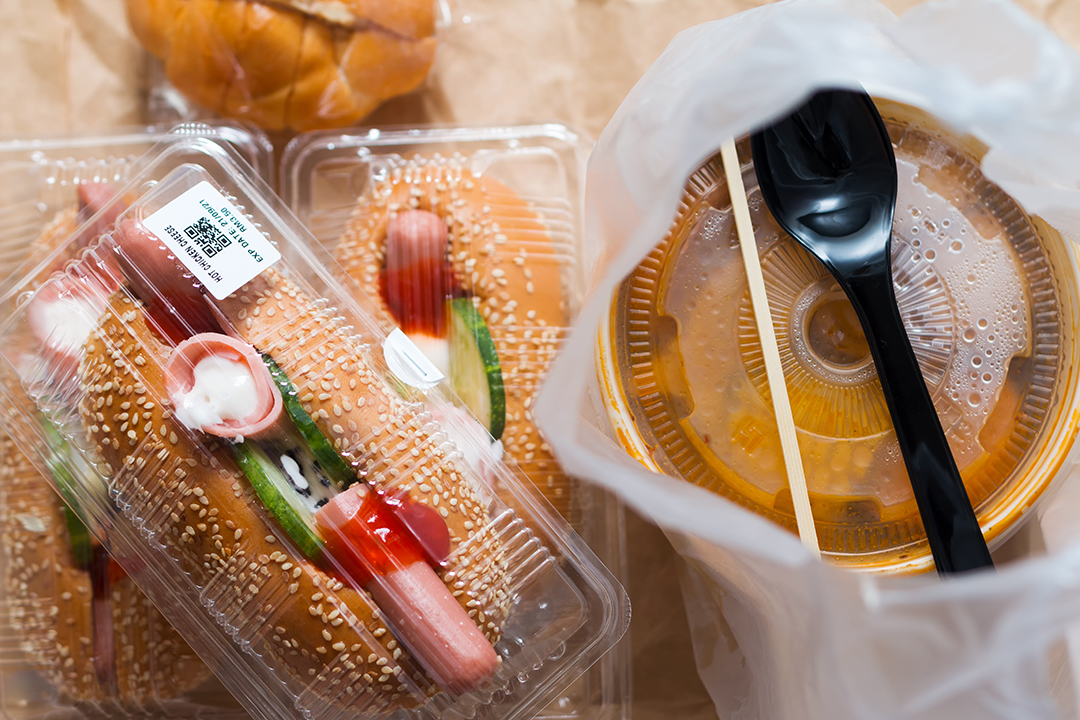
In the food industry, packaging design is as strategic as the product itself. Beyond appearance, it defines product safety, freshness, and shelf stability while influencing cost and efficiency across production lines. Every forming process shapes how well packaging performs under storage, transport, and handling conditions.
Food packaging forming technologies such as thermoforming and vacuum forming have become central to creating lightweight, durable, and high-clarity packaging that meets consumer and regulatory expectations. Selecting the right forming method allows manufacturers to balance performance with sustainability and achieve precise control over consistency, detail, and material usage.
Thermoforming and Its Role in Food Packaging
Thermoforming is a process that softens a thermoplastic sheet under heat, then molds it over or into a support tool (mold) until cooling fixes the shape. In food packaging, thermoforming enables the creation of rigid trays, blisters, clamshells, containers, lids, and inserts with clarity, dimensional control, and material efficiency.
Thermoforming methods used in food packaging include:
- Vacuum forming: the most common subtype in food packaging, where the heated sheet is drawn down into or over a mold via vacuum suction.
- Pressure forming: combines vacuum and positive air pressure to push the sheet further into fine features, giving sharper detail and better surface finish.
- Twin-sheet forming: two sheets are heated and formed against matching molds, then sealed together to form hollow, insulated, or structural components.
In packaging, thin-gauge thermoforming (sheet thickness below about 0.06 in) is common for consumer food trays and blister packs. Thick or heavy-gauge thermoforming is used more for structural parts such as crates or bins than for typical food packaging.
Vacuum Forming Applied to Food Products
Vacuum forming is a form of thermoforming in which negative pressure pulls the heated plastic against a mold. It is highly favored in the food packaging sector due to its relative simplicity, lower tooling cost, and adaptability to many food trays and blister-style packs.
Common uses of vacuum forming in food packaging include:
- Trays for fresh produce, meats, deli, and bakery items
- Blister packs or clamshells for confectionery and prepared foods
- Blister cavities in multipack packaging, such as eggs and deli meats
- Insert or support components inside product packs
Because vacuum forming does not use high pressure, the wall thickness distribution is often more uniform but less controllable in fine detail. When the design requires sharper ribs, embossing, or fine undercuts, pressure forming or plug assist techniques may be used.
Variants and Enhancements in Food Packaging Forming
Beyond standard vacuum forming, several enhancements or hybrid approaches exist to address design demands:
- Plug assist forming: a male plug pushes the softened sheet into the cavity, reducing thinning in deep draw areas.
- Plug assist pressure forming: combines plug assist with pressure forming to impart fine detail while controlling thickness.
- Match-mold forming: two halves close around the sheet to shape both sides, useful when symmetry is required.
- Multilayer thermoforming: layers of different polymers may be formed together to impart barrier function, such as moisture or oxygen resistance.
Each method trades off complexity, tooling cost, production speed, and achievable geometry. For example, plug assist reduces thinning but adds tooling cost, while pressure forming gives crisp detail but requires tighter process controls.
Comparing Strengths and Limitations Among Forming Types
Choosing the optimal forming process requires understanding tradeoffs across cost, flexibility, part geometry, and material performance.
| Forming Method | Strengths | Limitations / Risks |
| Vacuum forming | Lower tooling cost, simpler setup, widely used in food packaging.
Compatible with many food-grade polymers. Adequate for shallow draws and moderate detail. |
Limited in capturing fine detail or deep draws.
Wall thickness variation can occur. Less effective with overhangs or undercuts. |
| Pressure forming | Better surface finish, sharper detail, improved replication of mold texture.
It can reduce thinning in deep areas. |
More complex equipment and control are needed.
Higher tooling precision is required. Usually higher cost per part. |
| Twin-sheet / matched mold | Enables double walls, insulation, and structural strength.
Suitable for parts needing interior cavities or reinforcement. |
More tooling complexity, longer cycle time.
Higher capital cost. Often limited to certain shapes. |
In food packaging, the majority of applications rely primarily on vacuum forming, with pressure forming or plug assist reserved for more demanding cases.
Material Selection, Tooling, and Process Control in Food Packaging Forming
Food packaging thermoforming depends on the precise coordination of material selection, tooling design, and process control. Each factor contributes to product consistency, performance, and compliance with food safety standards. For manufacturers, understanding how these elements interact helps achieve reliable forming results, reduce waste, and maintain production efficiency.
Choosing the Right Polymer to Support Product Performance
Selecting suitable material is the foundation of every successful forming operation. Food-safe plastics must deliver clarity, durability, and reliable formability while meeting regulatory standards. Common polymers used in food packaging forming include:
- PET and PETG: Provide transparency and high impact strength suitable for retail packaging.
- PP (Polypropylene): Offers excellent thermal stability and chemical resistance for microwaveable or hot-fill containers.
- PS and HIPS (Polystyrene): Lightweight, affordable, and easy to form, ideal for disposable trays and cups.
- PE (Polyethylene) Variants: Provide flexibility and durability used in lids, seals, and protective films.
- Modified or Multilayer Structures: Combine barrier properties for moisture, oxygen, and aroma protection.
Choosing the right polymer balances clarity, barrier strength, formability, and cost. This decision directly affects shelf life, visual presentation, and overall efficiency in thermoforming food packaging applications.
Precision Tooling that Defines Forming Accuracy and Efficiency
Tooling establishes the precision, repeatability, and overall speed of the thermoforming process. The mold’s composition and surface finish directly impact cycle time and part quality. Manufacturers typically select from the following tooling materials:
- Aluminum: Durable and precise, ideal for long production runs with tight tolerances.
- Wood or Structural Foam: Economical for short runs and prototyping applications.
- 3D Printed Molds or Inserts: Useful for rapid testing and product development adjustments.
High-quality tooling ensures uniform forming, clean definition, and consistent release. These characteristics are vital for meeting production targets and maintaining quality control in food packaging manufacturing.
Advanced Process Control that Delivers Consistent Forming Results
Process stability determines overall forming quality and production efficiency. Automated thermoforming systems continuously monitor and adjust operational parameters to ensure consistent results. Key variables include:
- Uniform heating and controlled dwell time
- Steady vacuum pressure and air assist balance
- Precise synchronization of clamping, forming, and cooling stages
- Controlled cooling rates to prevent warping or shrinkage
Modern process control systems reduce setup time, lower scrap rates, and maintain reliable throughput. For manufacturers focused on scalability, this level of control supports higher productivity in both thermoforming food packaging and vacuum forming food products.
Packaging Performance and Cost Implications
The forming method influences packaging performance metrics such as structural rigidity, barrier function, material yield, and compatibility with lidding systems. Deep-draw trays may need reinforced corners or thicker walls, while roll-fed thermoforming often reduces scrap and improves consistency compared to die-cut blanks. Material selection and process optimization directly impact shelf appeal, product safety, and packaging cost efficiency.
From a cost standpoint, vacuum forming generally offers lower initial tooling and faster turnaround for mid to high volumes. Pressure forming, though more complex, can reduce post-trimming steps and deliver enhanced product aesthetics. Twin-sheet forming adds cost but supports specialized packaging features such as double walls or built-in insulation.
Belovac Capabilities in Food Packaging Forming
At Belovac, we design and manufacture advanced thermoforming and vacuum forming machines built for efficiency, precision, and durability in food packaging production. With over 30 years of U.S.-based engineering experience, our systems deliver consistent results for both small and large-scale manufacturing.
- Custom Thermoforming Solutions: Manual sheet-fed and automated roll-fed systems tailored for food packaging applications.
- Industrial Drying Ovens: Pre-dry plastic sheets to enhance material performance and prevent defects.
- Engineered Performance: Optimized heat distribution, precise control, and durable machine construction.
- PLC Automation: Integrated controls improve uptime, consistency, and overall process efficiency.
Upgrade your forming capabilities with Belovac’s reliable thermoforming solutions. Contact us today to discuss your project or request a quote.